Die Südtirolersiedlung in Reutte – ein Stück Zeitgeschichte mitten im Ort


Heute möchte ich Euch mit dem „Heiligen Grab oder Ostergrab“ einen Brauch vorstellen, der seit vielen Jahrhunderten in meiner Heimat gepflegt wird und den ich als etwas ganz Besonderes empfinde. Zur Osterzeit gehört einfach dazu „Heilige Gräber schauen zu gehen“.
Nach dem ersten Kreuzzug im Jahre 1096 war Jerusalem unter christlicher Verwaltung. Pilger konnten nun sicher dorthin reisen und jene Orte besuchen, an denen Jesus der Überlieferung nach gelebt und gewirkt hatte und auch gestorben war. Ein Besuch der monumentalen Grabeskirche, die über dem Grab Jesu errichtet wurde, gehörte hier als Krönung dazu.
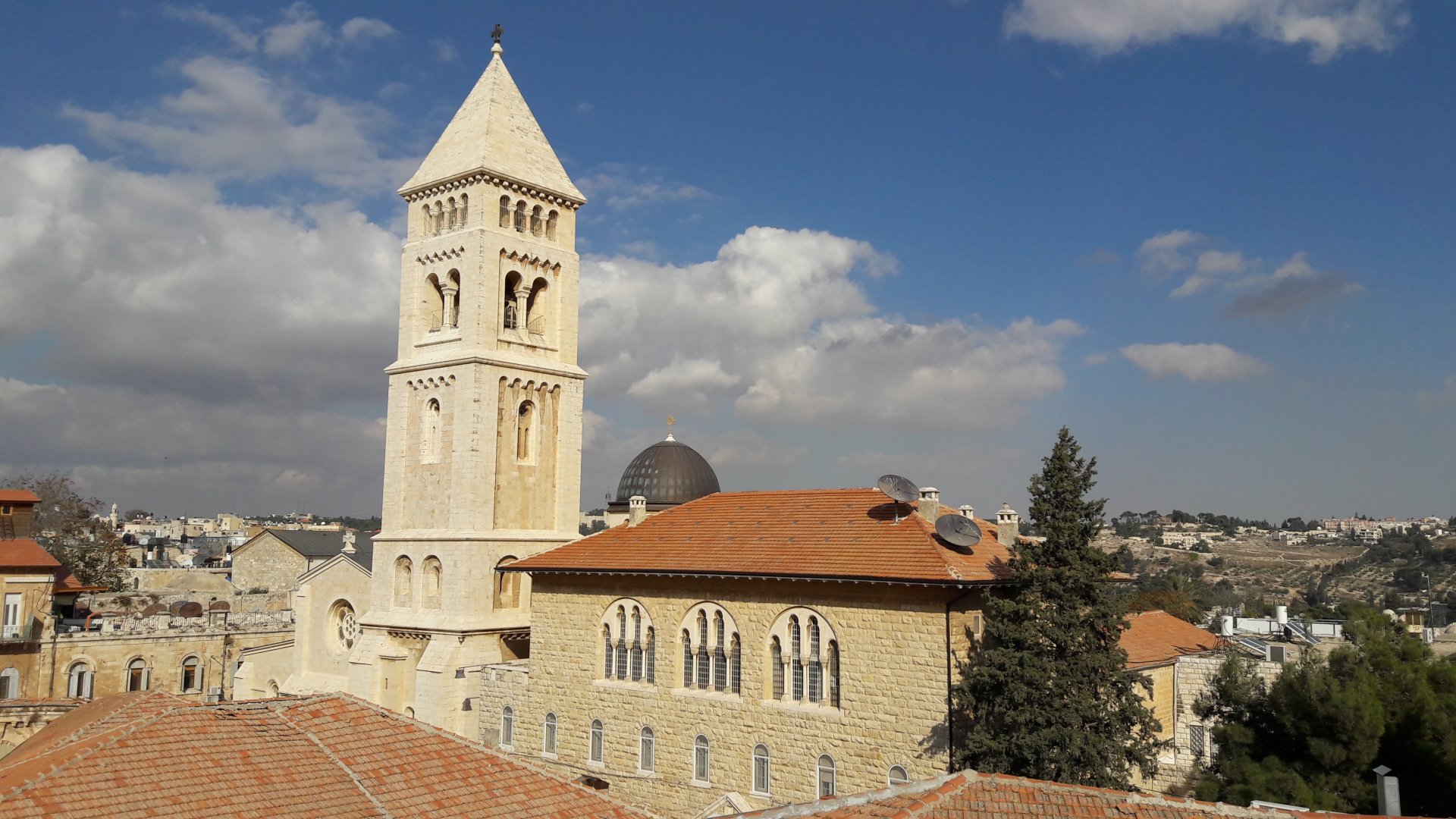
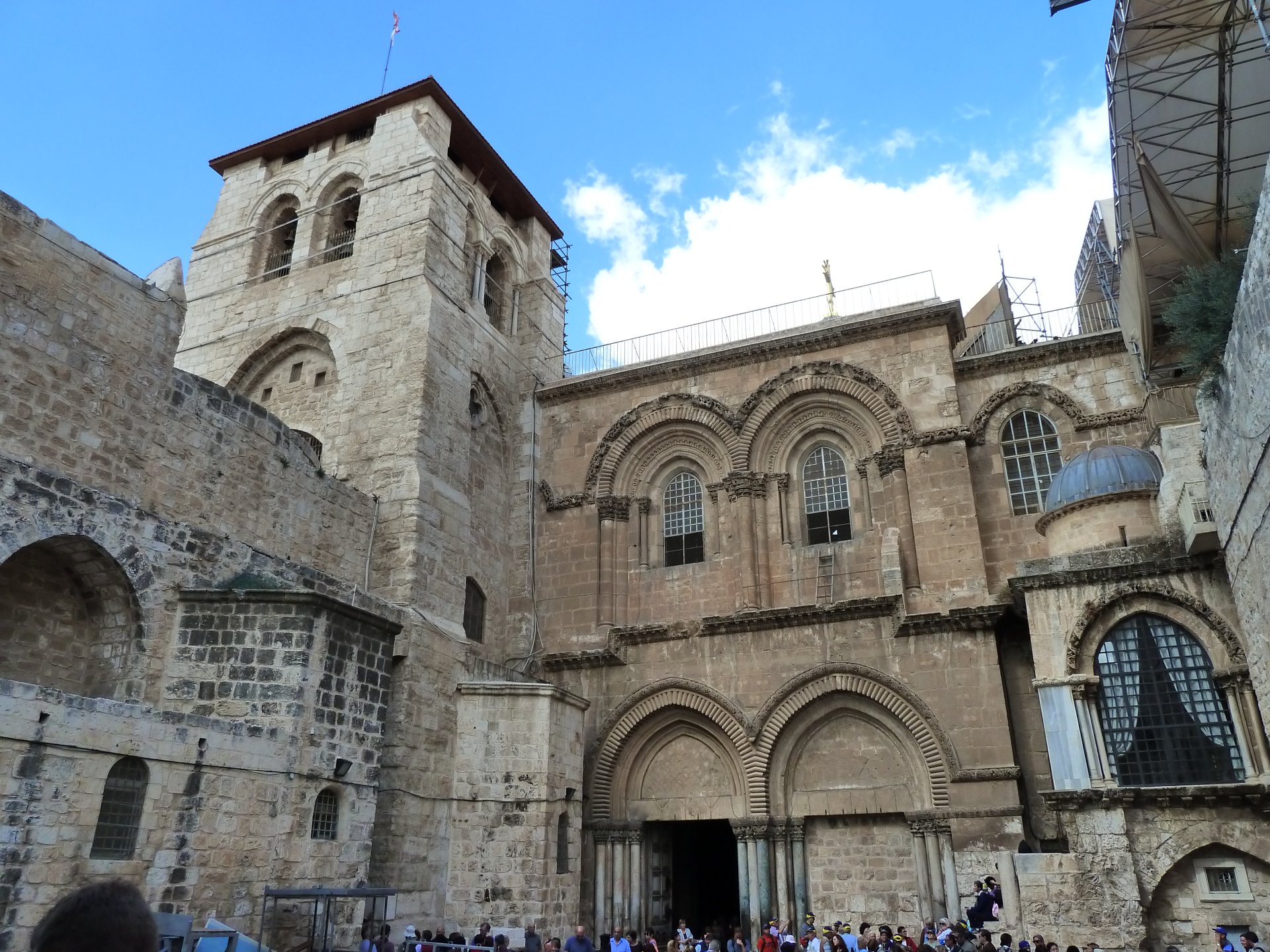
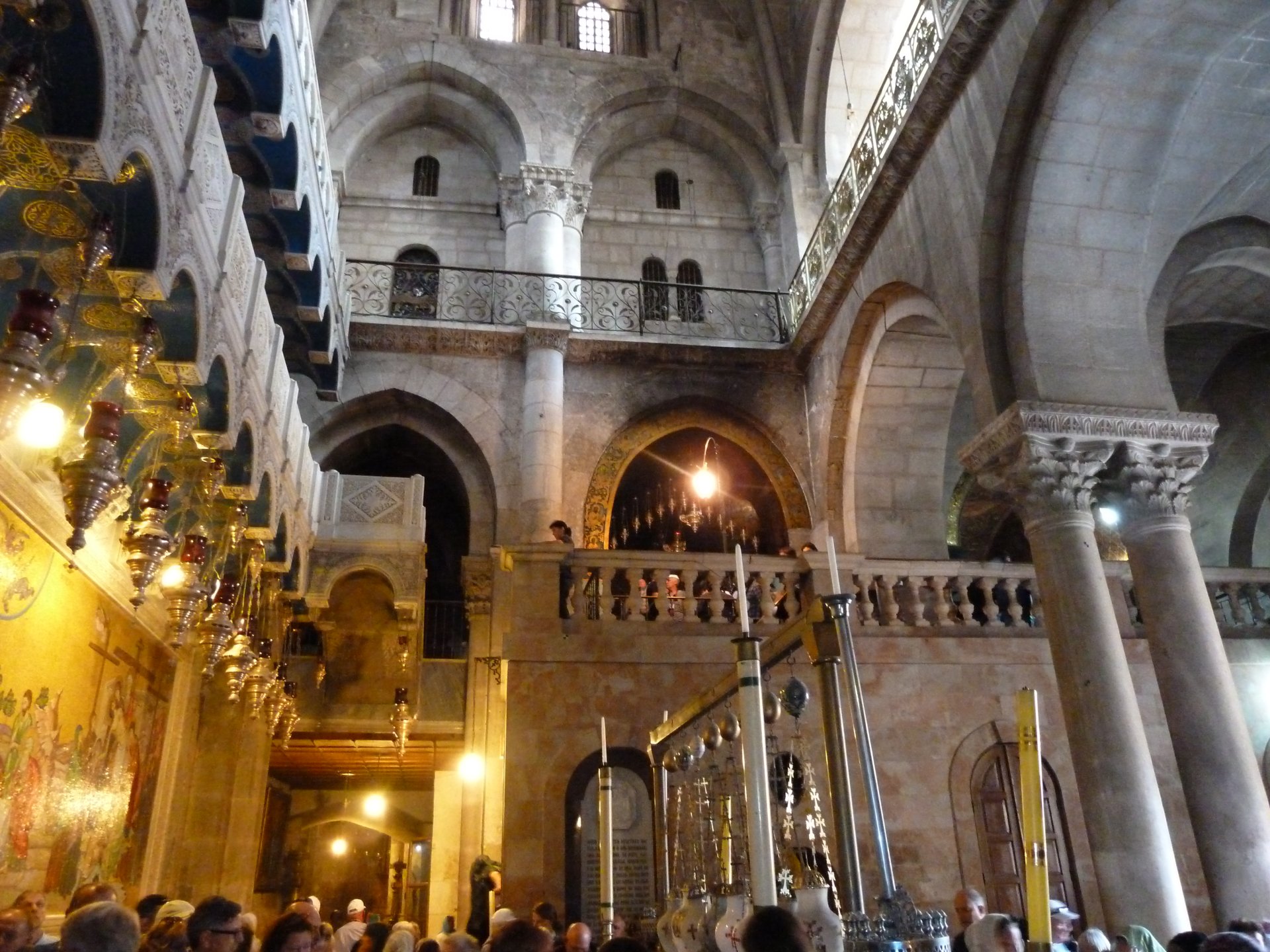
Es entstand der Wunsch, auch zuhause ein Stück Jerusalem entstehen zu lassen und so wurden zur Osterzeit in den Kirchen „Heilige Gräber“ aufgestellt. So konnte jeder, der die Kirche besuchte, eindringlich die letzten Tage des Gottessohnes nachempfinden. Das Geschehen der Passion wurde begreifbar und die frohe Botschaft der Auferstehung am Ostersonntag erfüllte die Betrachter mit großer Freude. Es entstanden prächtige Heilige Gräber, die oftmals den ganzen Altarraum ausfüllten.
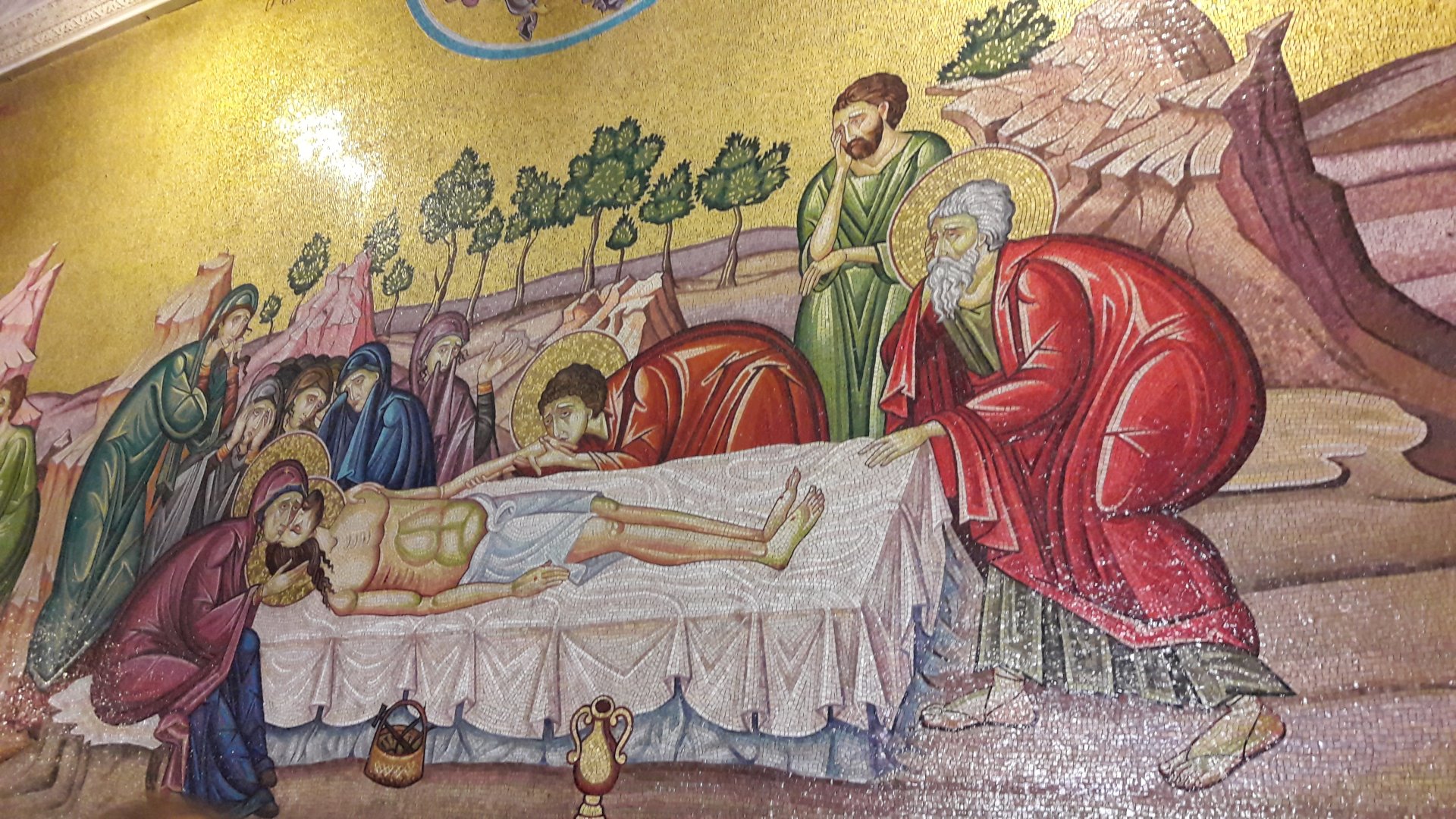
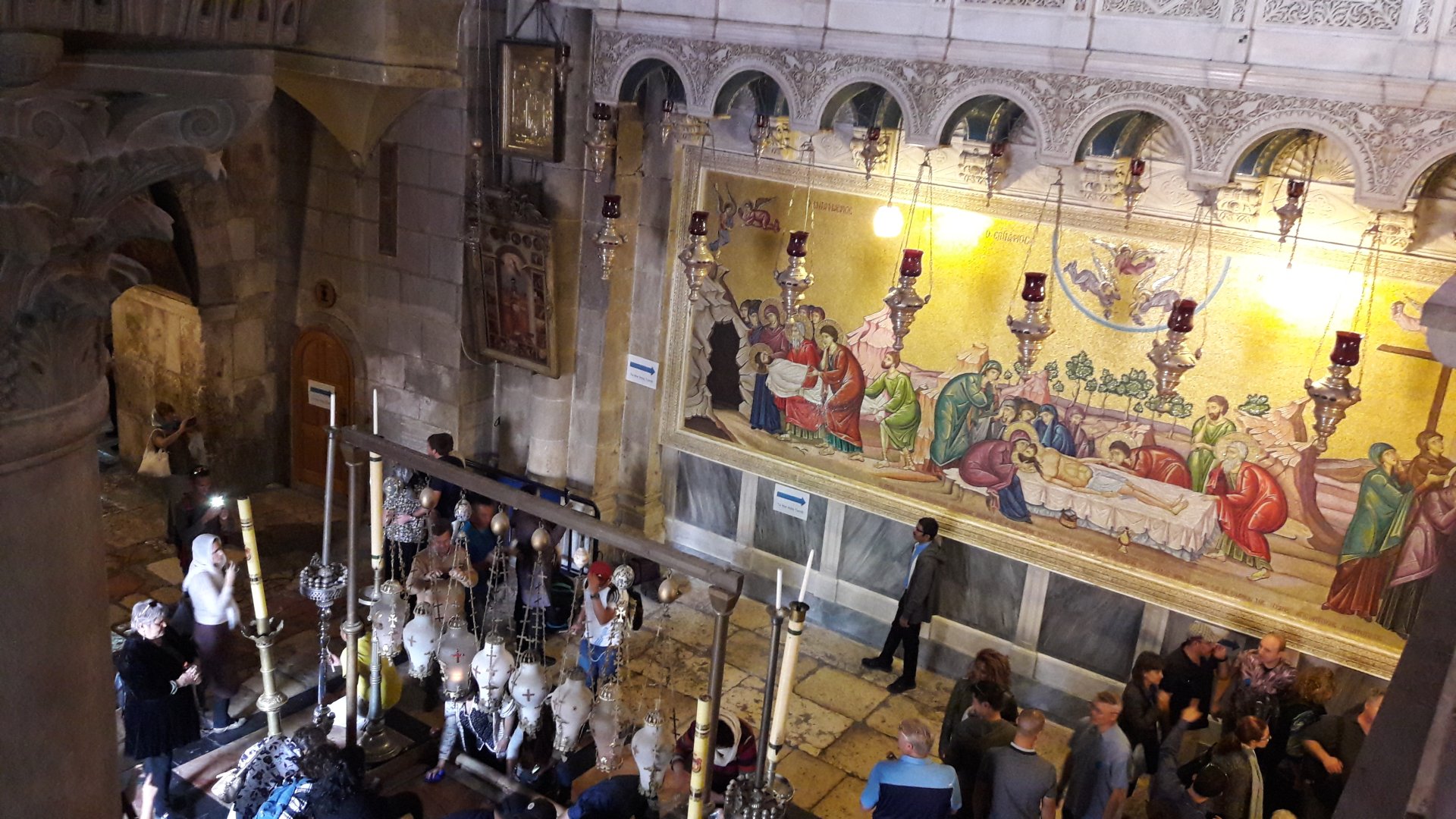
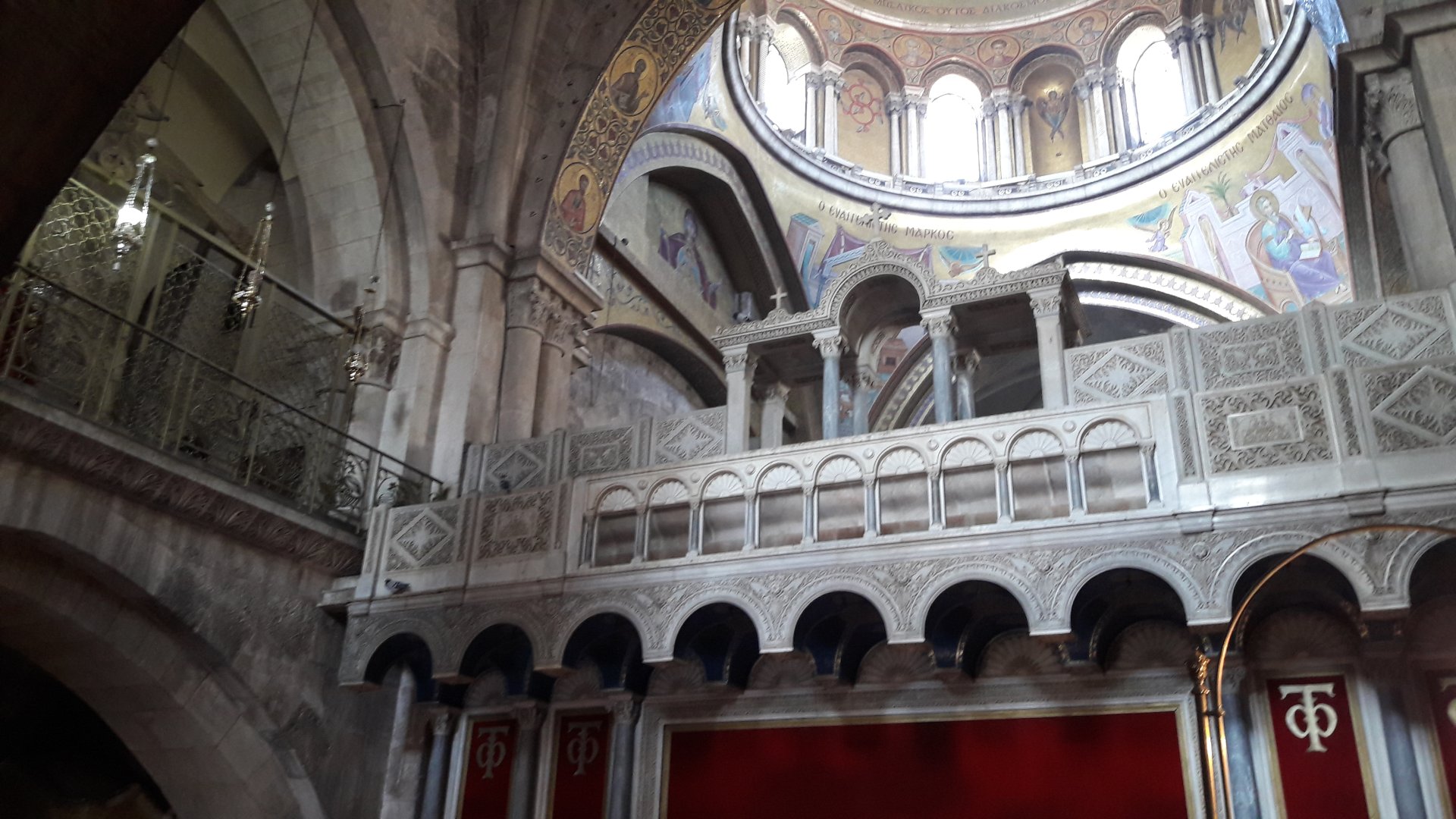
Unter Kaiser Joseph II. wurden diese Heiligen Gräber 1782 als „Sensationen“, die die wahre Andacht verhindert, verboten, ebenso fielen zahlreiche dieser kulturhistorischen Besonderheiten der kurzen bayerischen Herrschaft in Tirol (1805-1814) zum Opfer. Im 19. Jahrhundert erlebten die Ostergräber wieder eine Blüte, um im 20. Jahrhundert nach dem Zweiten Vatikanischen Konzil wieder zu verschwinden. Seit den 1980er-Jahren jedoch erfreuen sich die schönen Darstellungen des Ostergeschehens wieder großer Beliebtheit. Viele auf Dachböden oder in Kellern gelagerte Kostbarkeiten wurden aufwändig restauriert und werden nun regelmäßig zur großen Freude der Gläubigen aufgestellt.
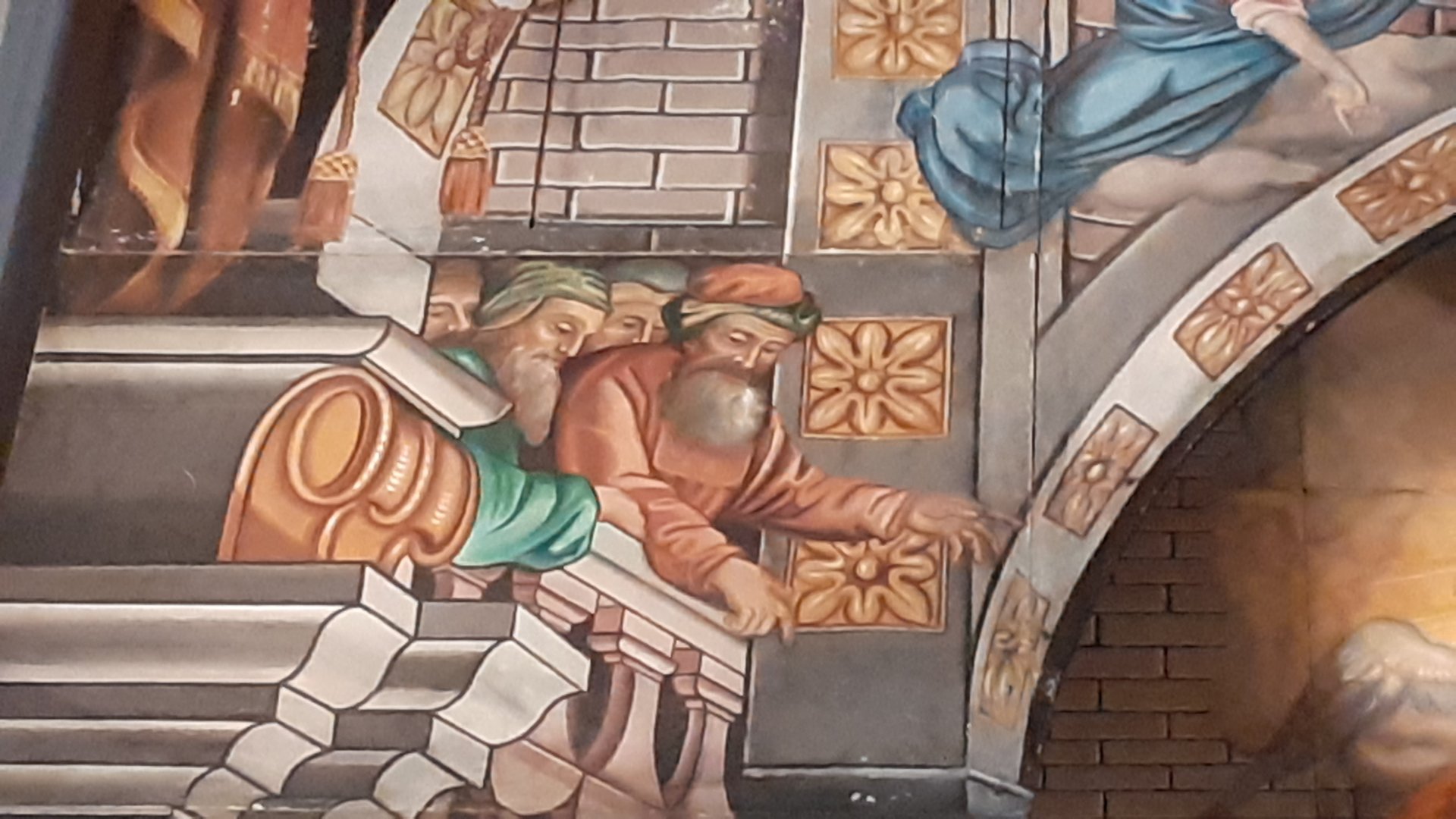
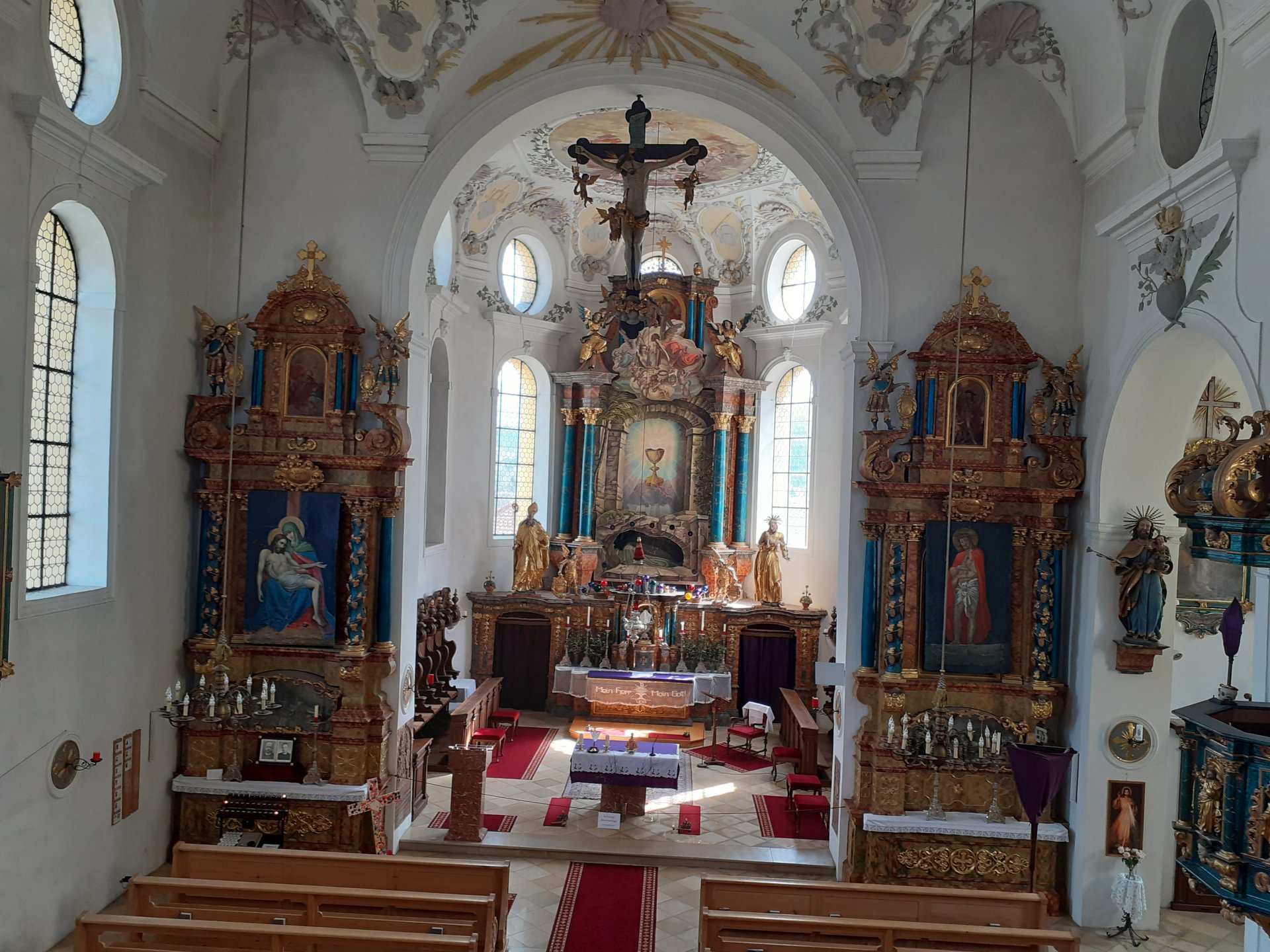
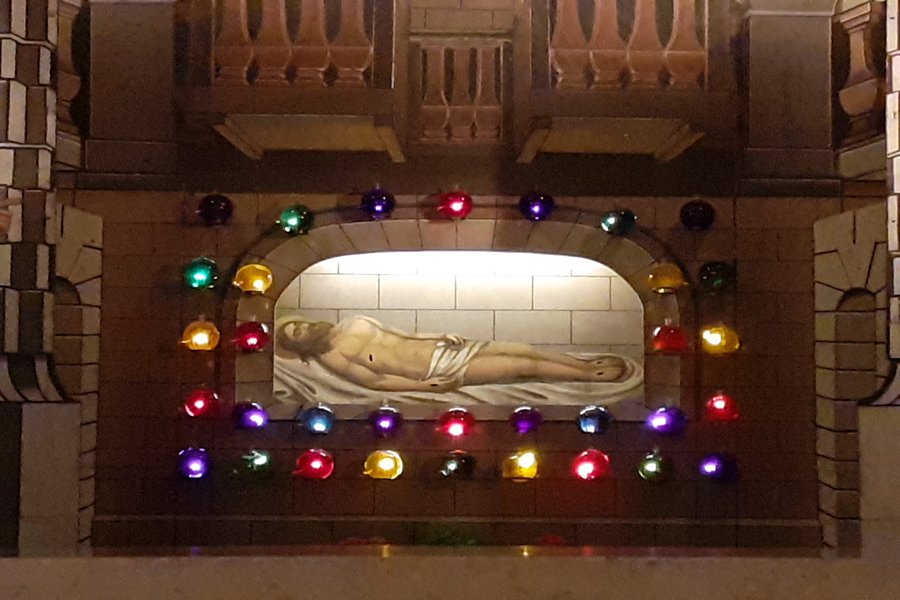
Zwischen Gründonnerstag und Ostersonntag wird das Heilige Grab gemäß der Liturgie täglich umgestaltet – am Gründonnerstag sieht man eine Ölbergszene oder Blumen, am Karfreitag liegt der Leichnam Christi im Grab und am Karsamstag bei der Osternachtsfeier zeigt sich der Auferstandene – hier wird entweder die Figur des Heilands ausgetauscht oder – und das ist besonders beeindruckend – auf einer rückseitig angebrachten und daher nicht sichtbaren Plattform nach oben gekurbelt, um strahlend das Osterwunder zu veranschaulichen. Zudem bereichern Szenen aus der Leidensgeschichte, Wächterfiguren und bunte Glaskugeln die beeindruckenden Darstellungen.
Im Bezirk Reutte werden in der Karwoche in vielen Kirchen diese Heiligen Gräber aufgestellt – ich möchte Euch einen Überblick über jene in der Naturparkregion Reutte geben und das größte davon, das sich in der Pfarrkirche St. Anna in Reutte befindet, etwas genauer vorstellen:
Breitenwang:
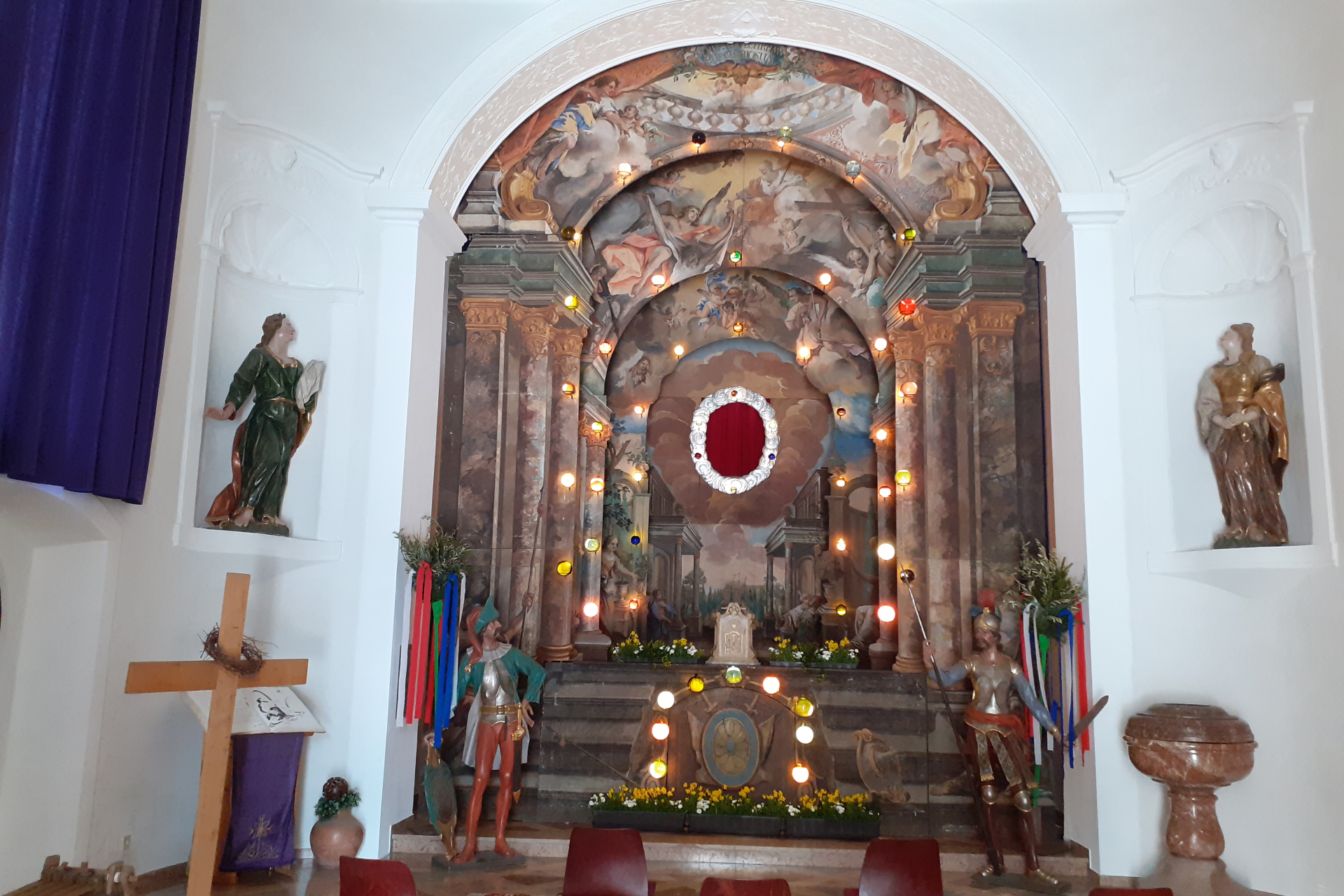
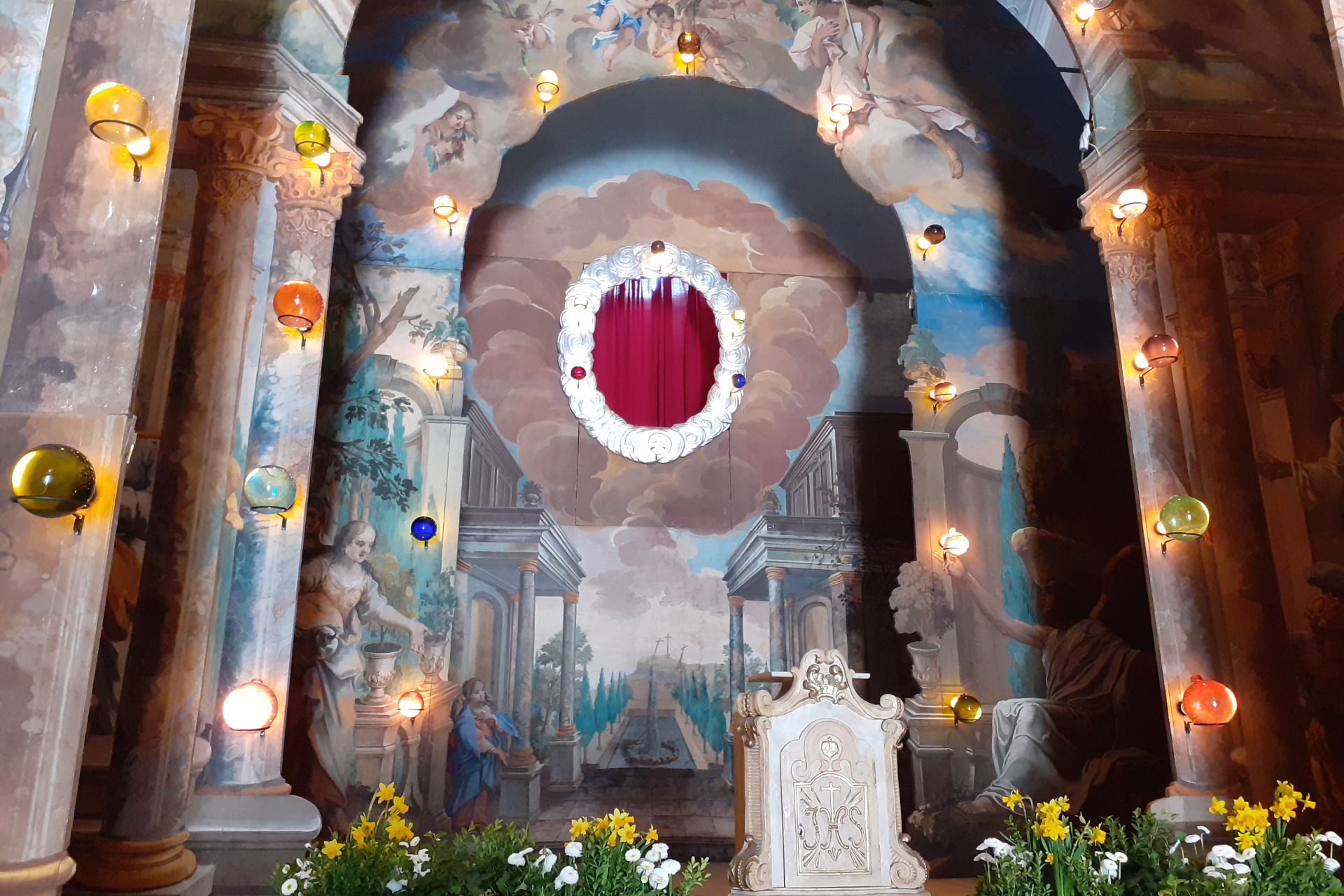
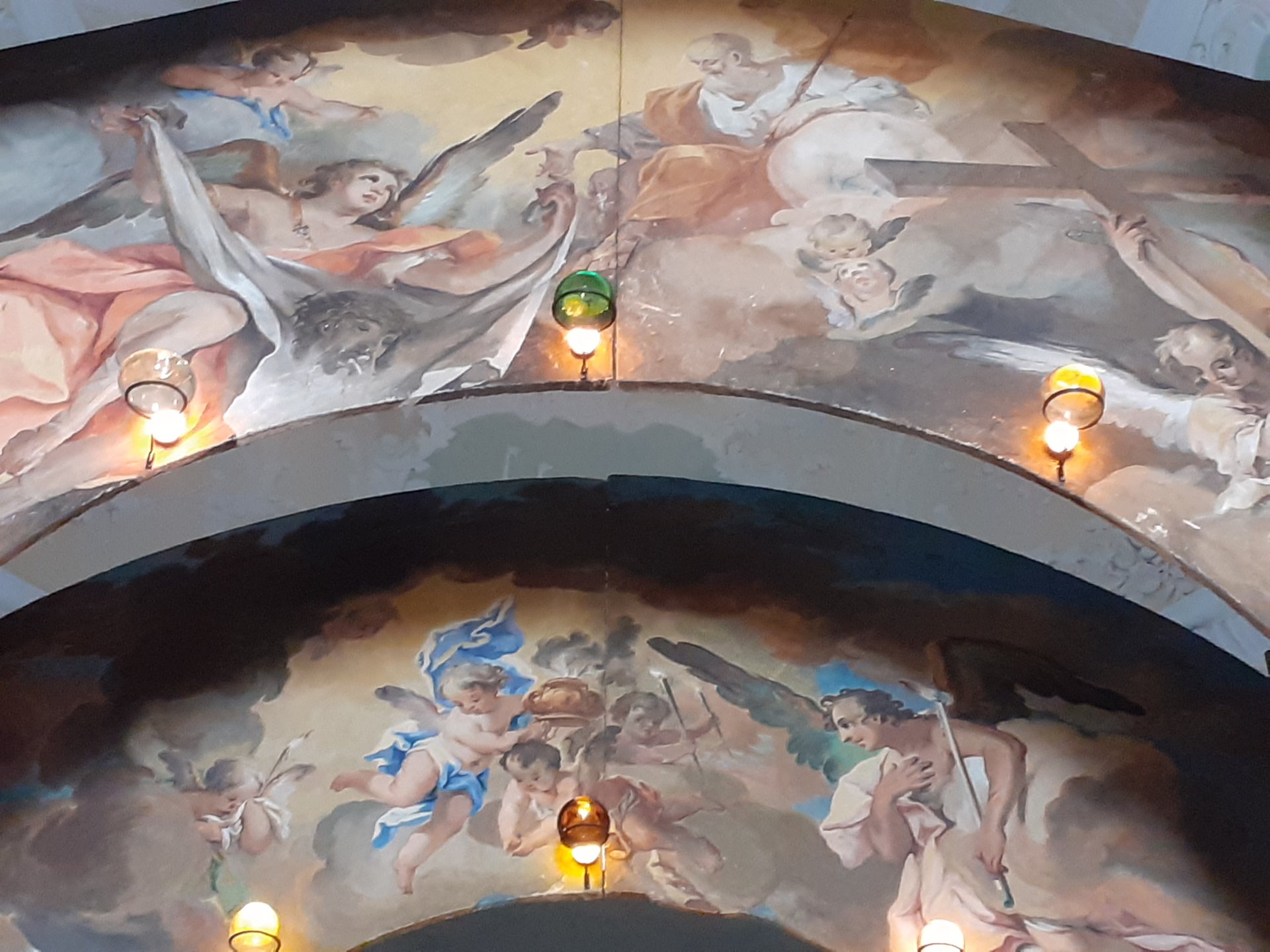
Das Heilige Grab wurde 1738 fast wie eine barocke Theaterbühne passend für die Auferstehungskirche direkt neben der Dekanatspfarrkirche geschaffen. Es stammt vom Barockmaler Balthasar Riepp unter Mithilfe seines Reuttener Schülers Franz Anton Zeiller. Das Werk besteht aus drei Bogenkulissen mit beeindruckender Tiefenwirkung.
Pinswang:
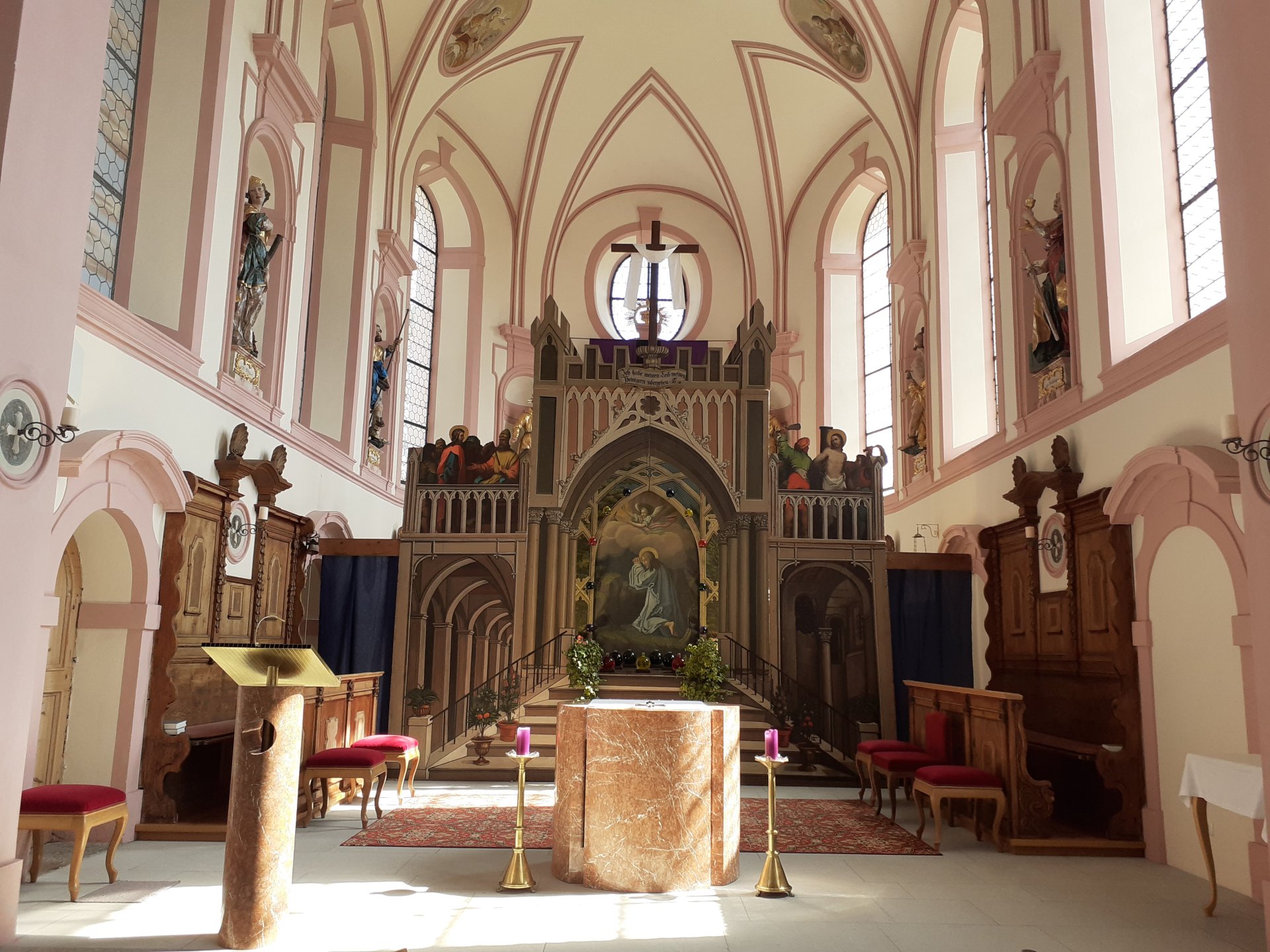
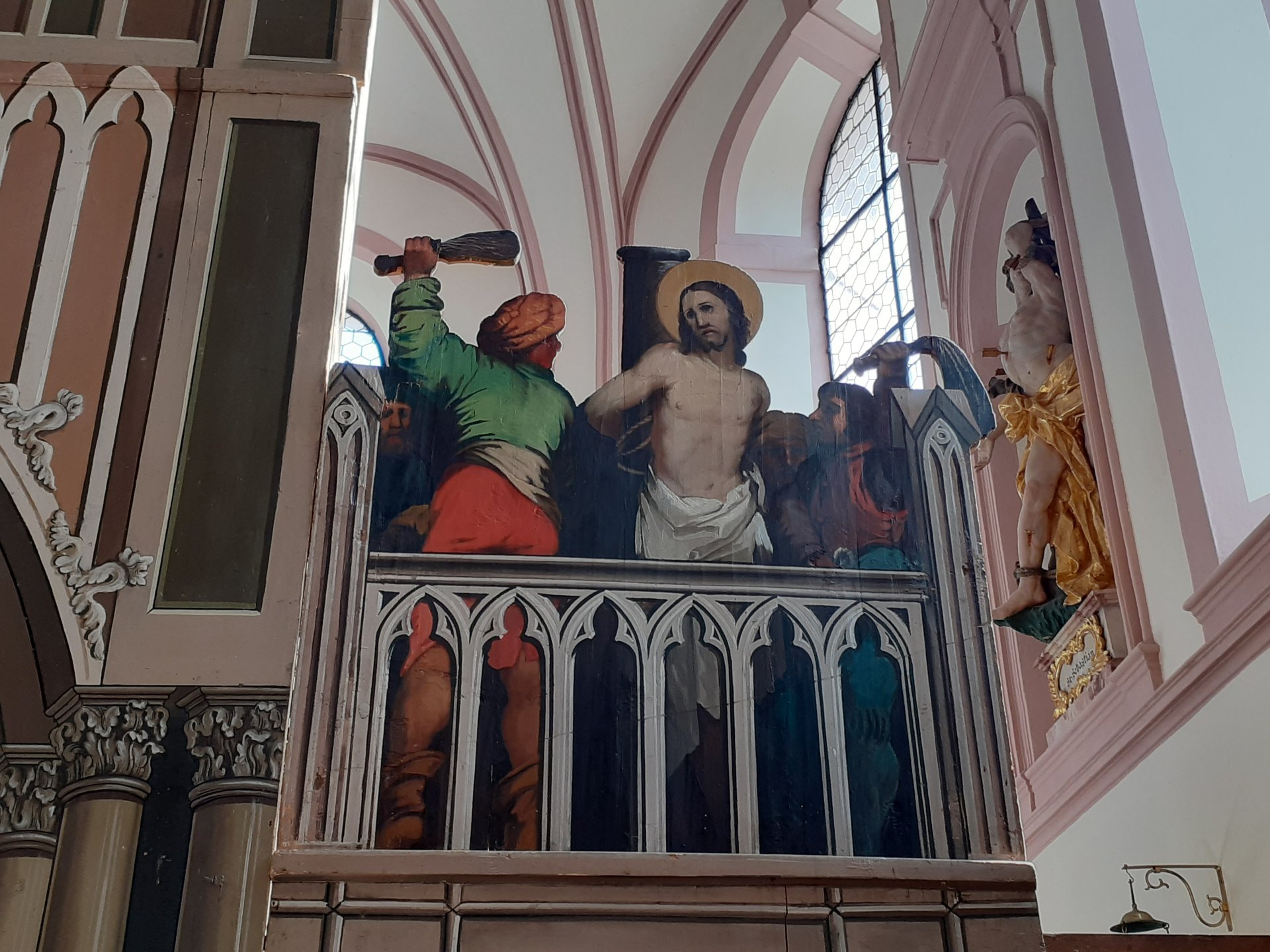
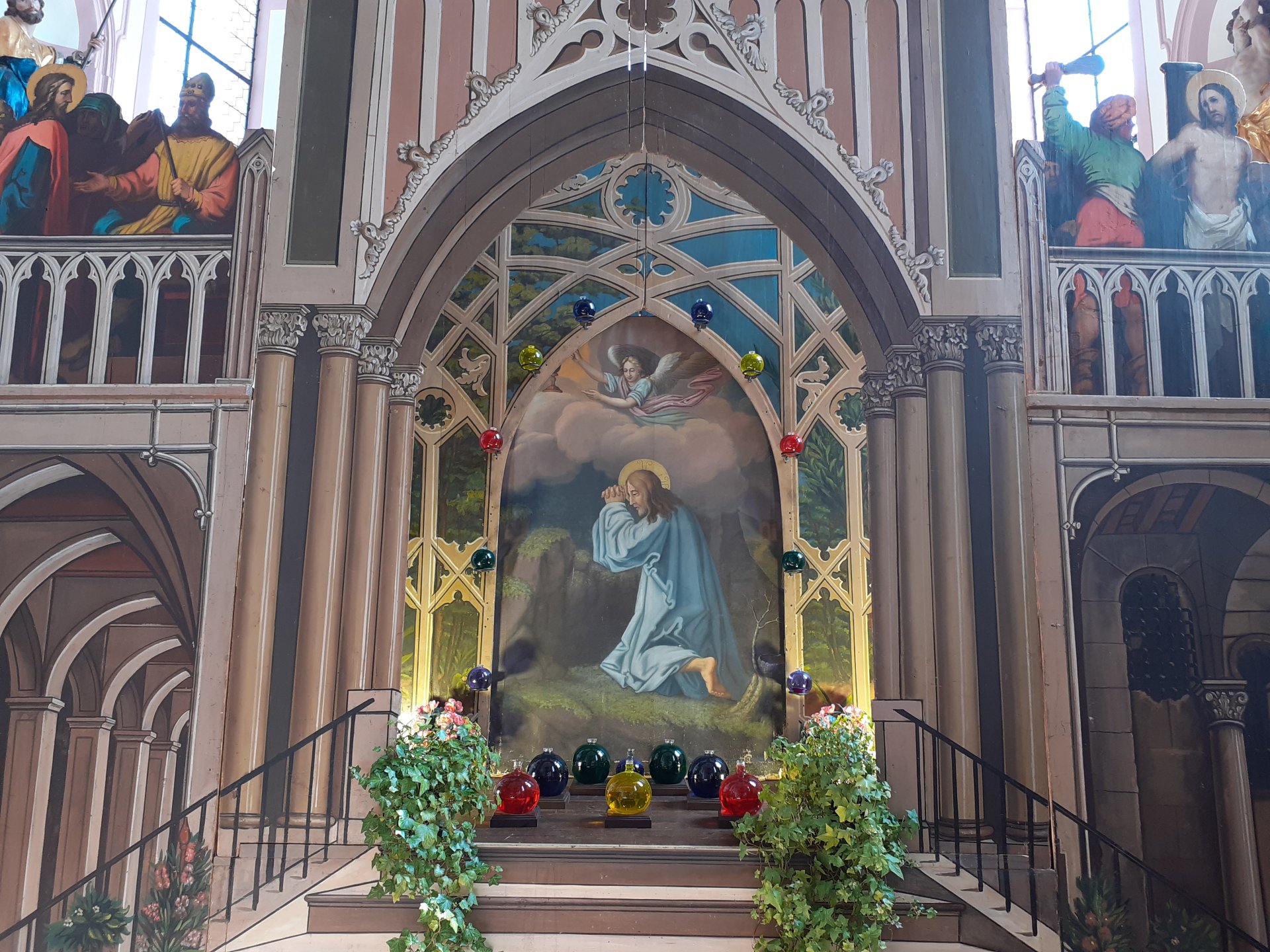
Das Ostergrab in der Pfarrkirche zum hl. Ulrich wurde erstmals 1839 aufgestellt und im Stil der Nazarenerkunst gestaltet, passend zur früheren Kirchenausstattung. Es imitiert eine dreischiffige Kathedrale. Über der Grabkulisse steht das leere Kreuz mit einem weißen Tuch, eine breite Treppe läuft auf die Grabnische zu.
Weißenbach:
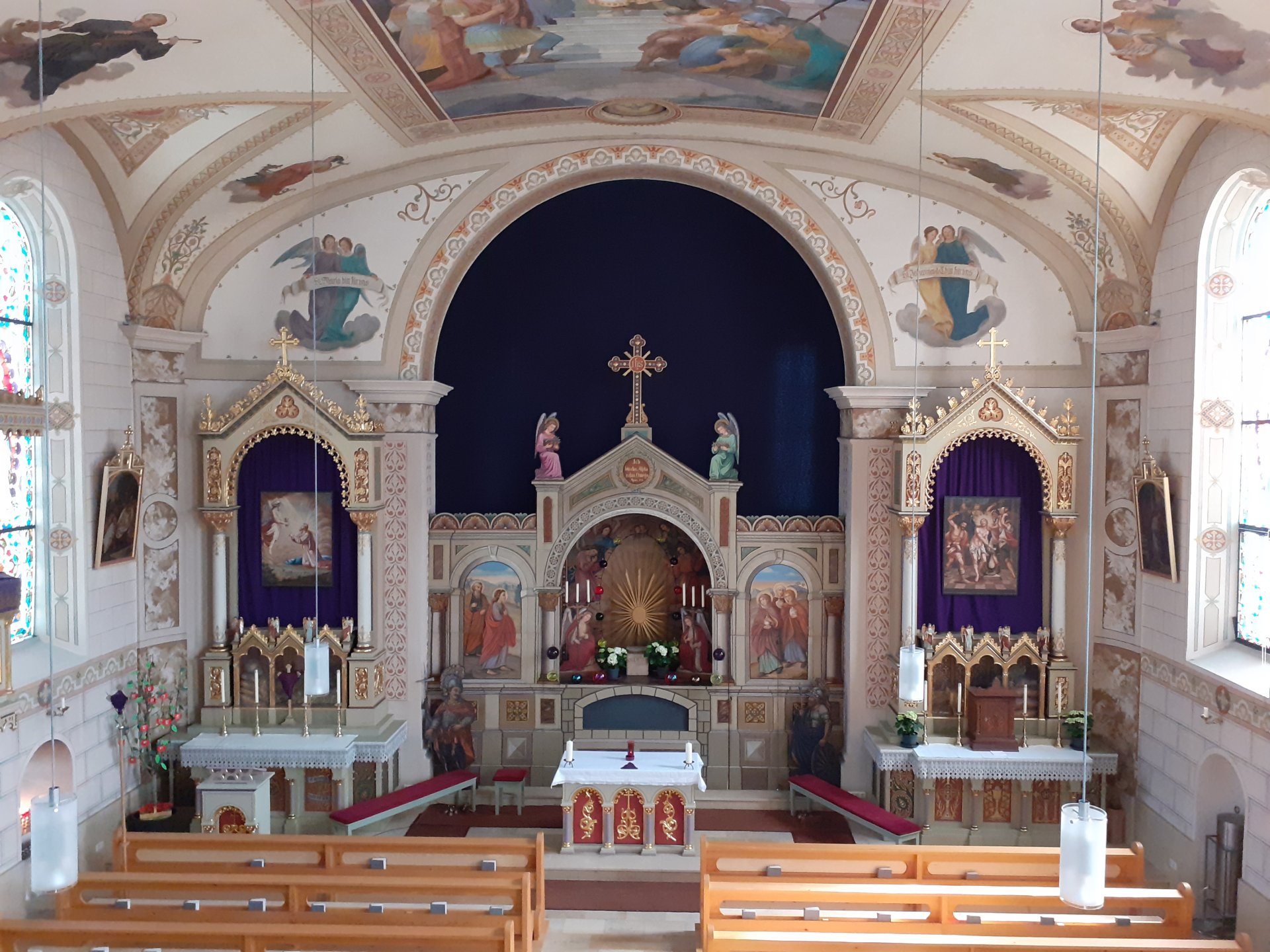
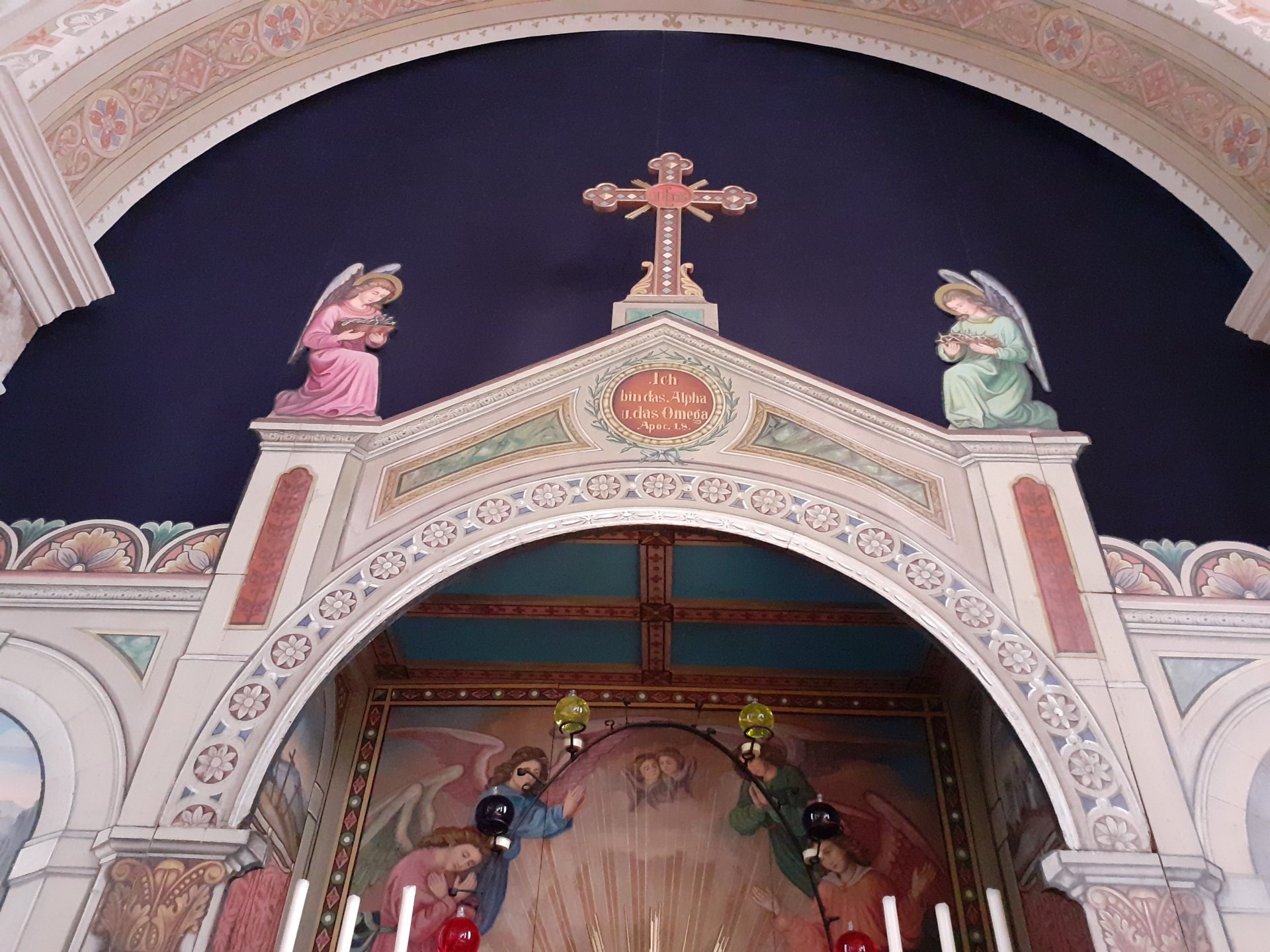
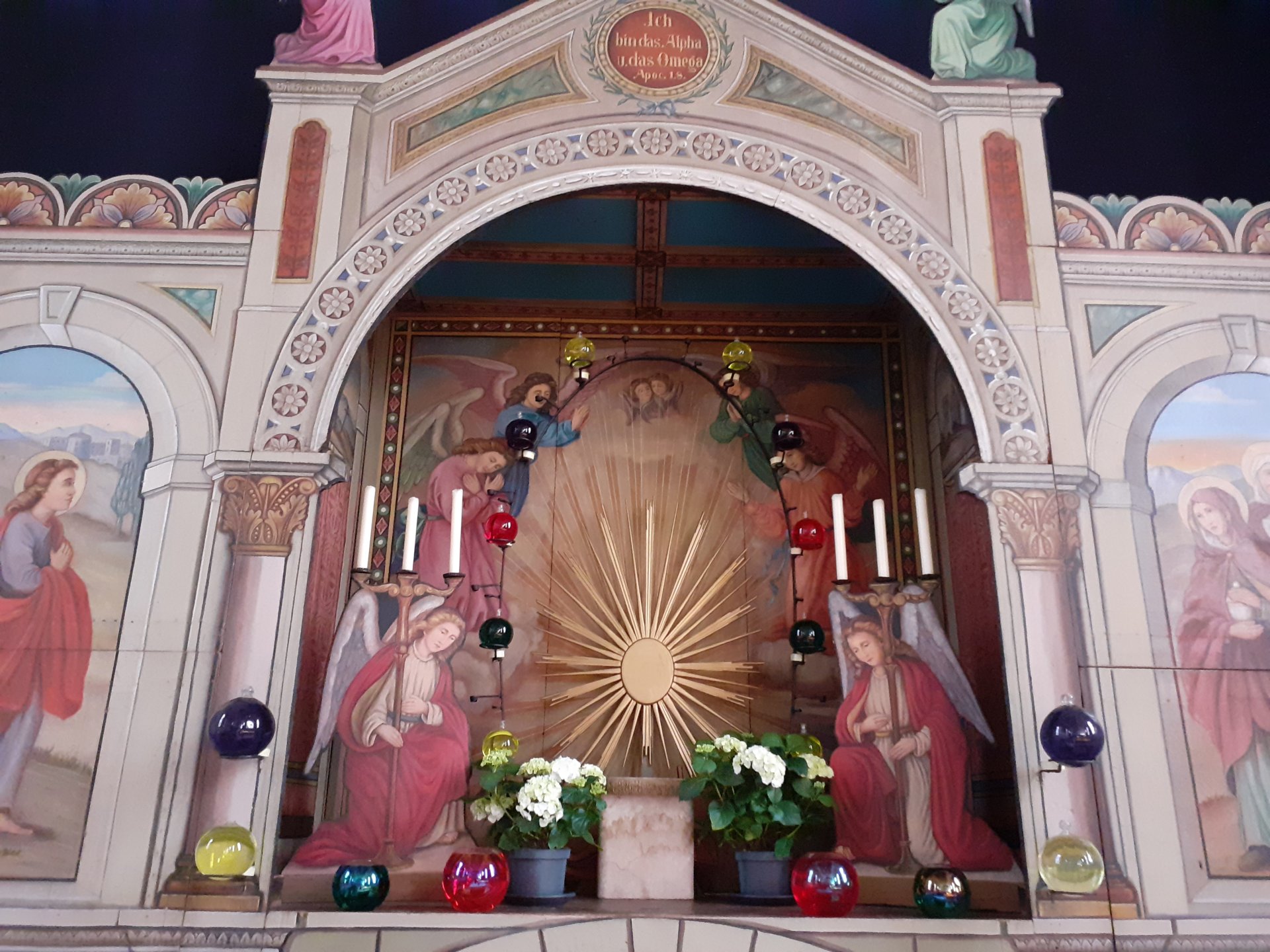
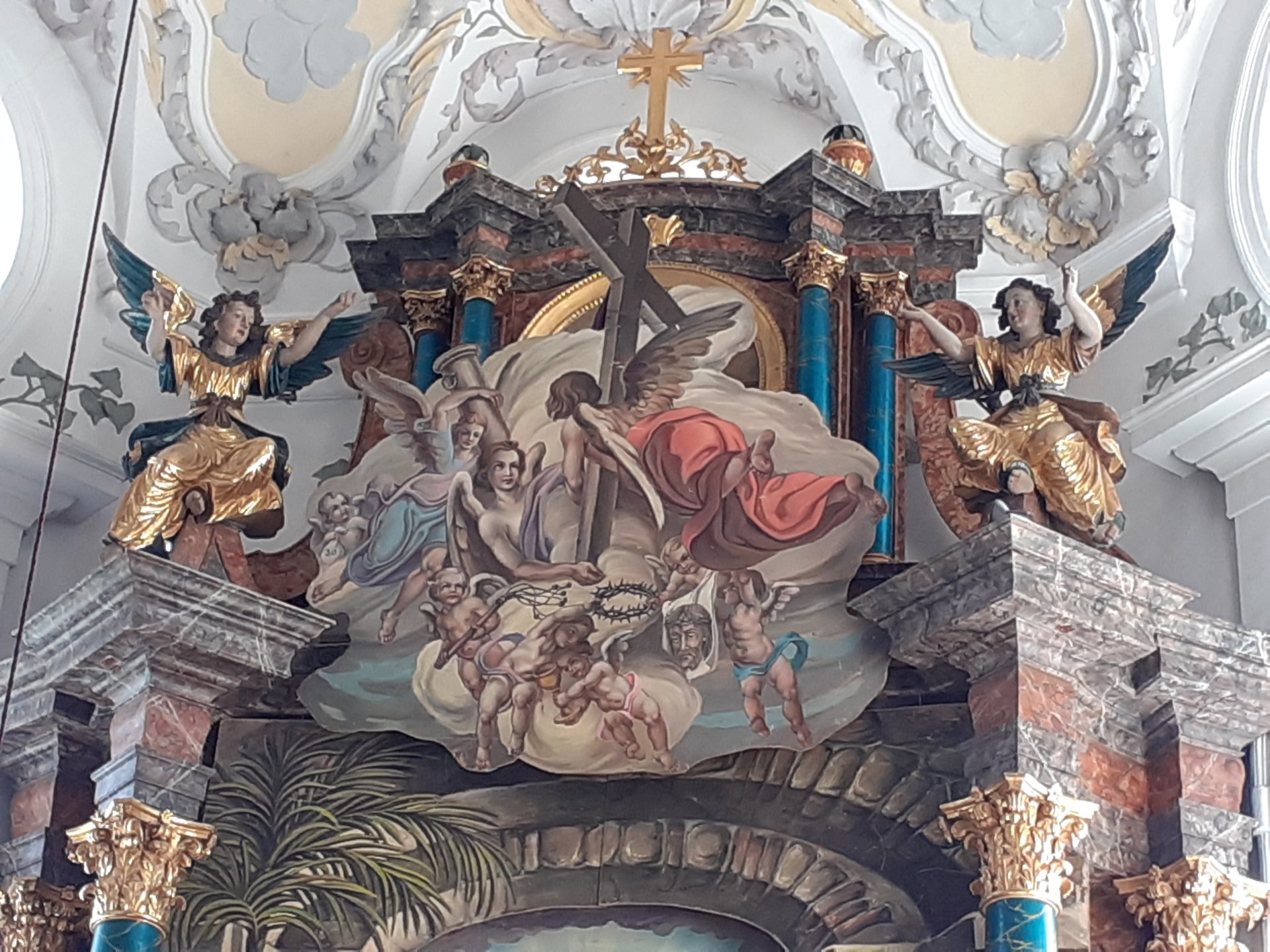
Das Heilige Grab in der Pfarrkirche zum hl. Sebastian wurde Ende des 19. Jahrhundert vom Außerferner Maler Johann Kaerle im neuromanischen Stil geschaffen. Es besteht aus zwei Kulissenbögen mit flügelartigen Seitenteilen. Wächterfiguren flankieren die Szene, die Engel am Giebel tragen die Leidenswerkzeuge Christi, auf dem Spitz steht das leere Kreuz mit Strahlenbündeln.
Wängle:
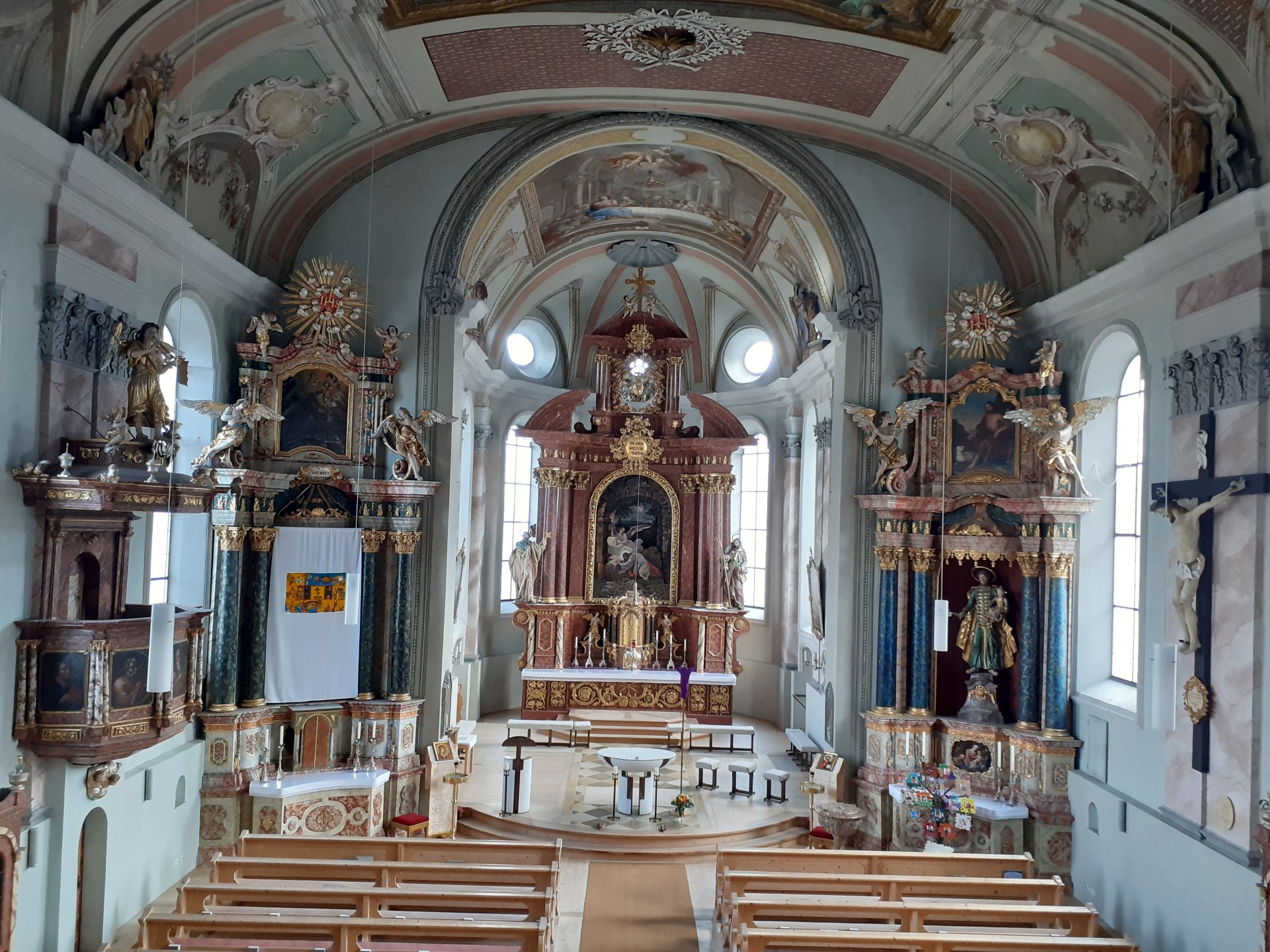
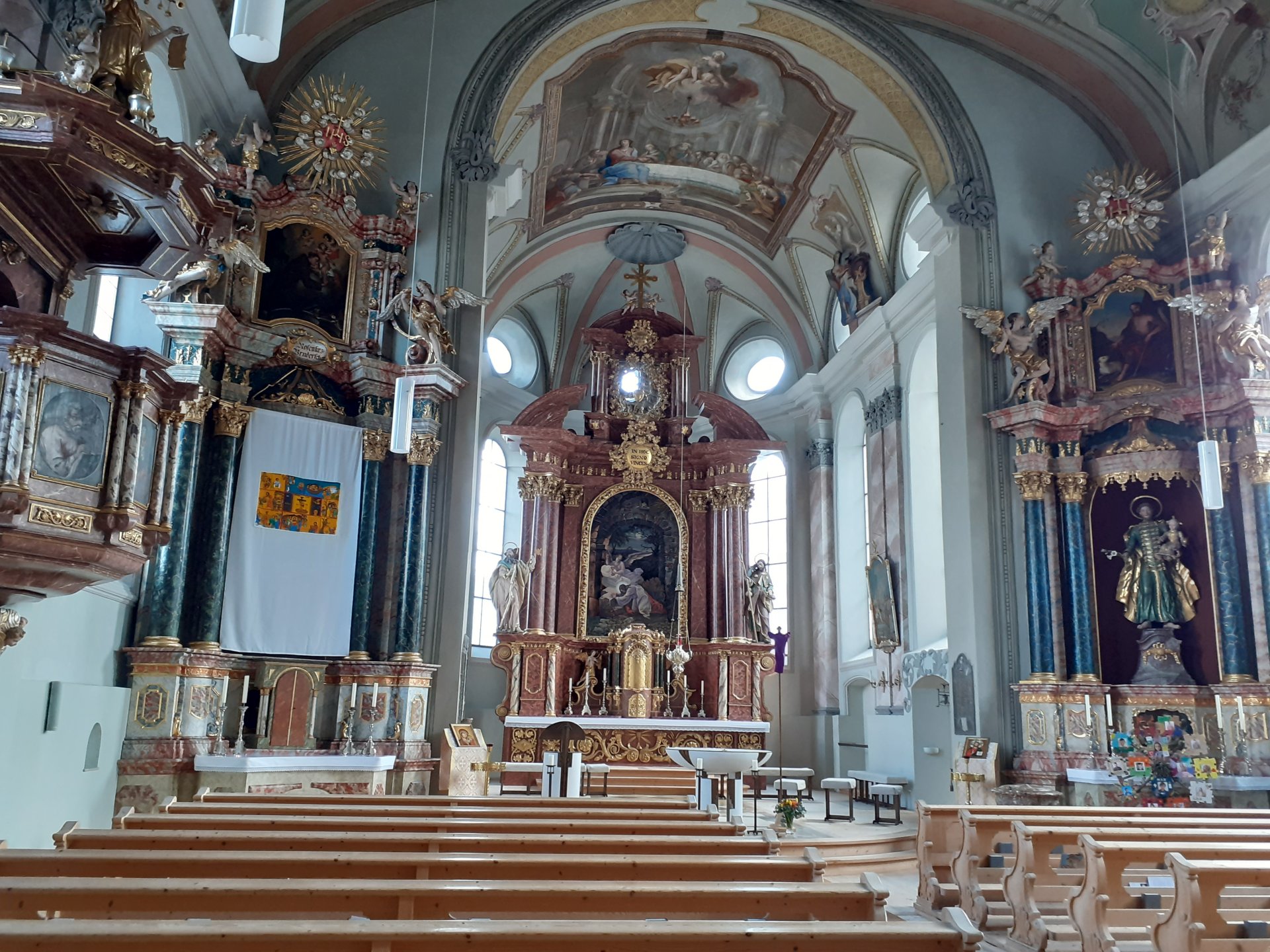
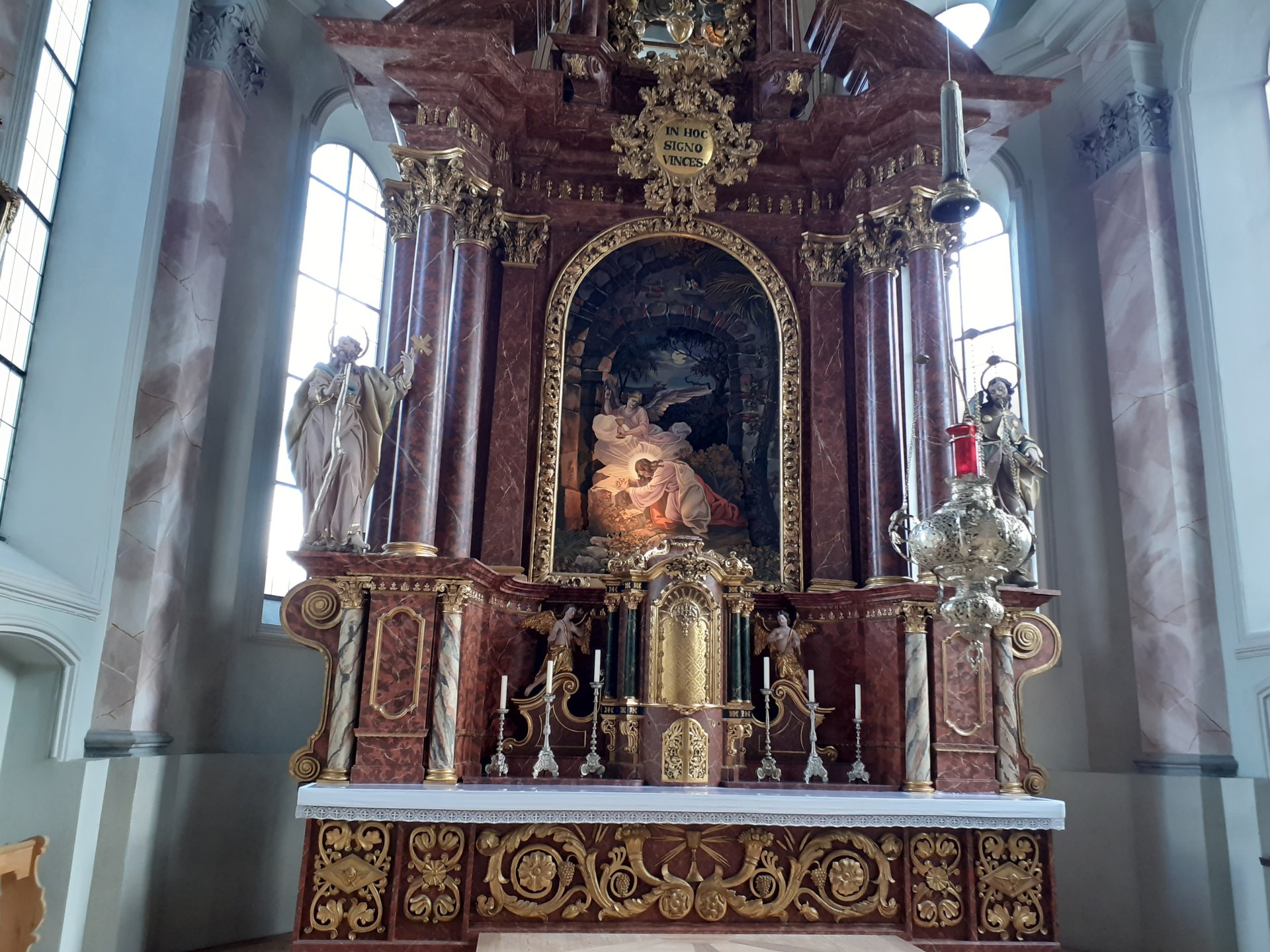
In der Pfarrkirche zum hl. Martin wird die vom Maler Franz Seelos gestaltete Kulisse anstelle des Hochaltarblattes in den Rundbogenrahmen eingesetzt. In diesen Kulissenbogen werden verschiedene Szenen der Osterliturgie eingesetzt – zuerst Christus am Ölberg, später dann die Grabnische mit Leichnam. In der Osternacht wird der auferstandene Christus aufgezogen.
Vils:
In der Stadtpfarrkirche Mariae Himmelfahrt ist vor dem Hochaltar ebenfalls ein Heiliges Grab des Krippenmalers Franz Seelos zu sehen, das 1959 entstand. Elemente des Hochaltars werden in die Komposition miteinbezogen. Wechselnde Hintergrundbilder lassen das österliche Geschehen lebendig werden, Blumen und bunte Glaskugeln umrahmen die Kulisse.
Das Heilige Grab in Reutte
In Reutte gab es bereits vor mehr als 300 Jahren ein Ostergrab. Ein verheerender Brand zerstörte 1846 auch fast das ganze Kircheninventar und ein neues Ostergrab wurde benötigt. Das heutige Heilige Grab wurde 1847 vom einheimischen Künstler Josef Anton Köpfle dem Jüngeren aus Höfen geschaffen. Es wurde 1848 erstmals zu Ostern aufgestellt.
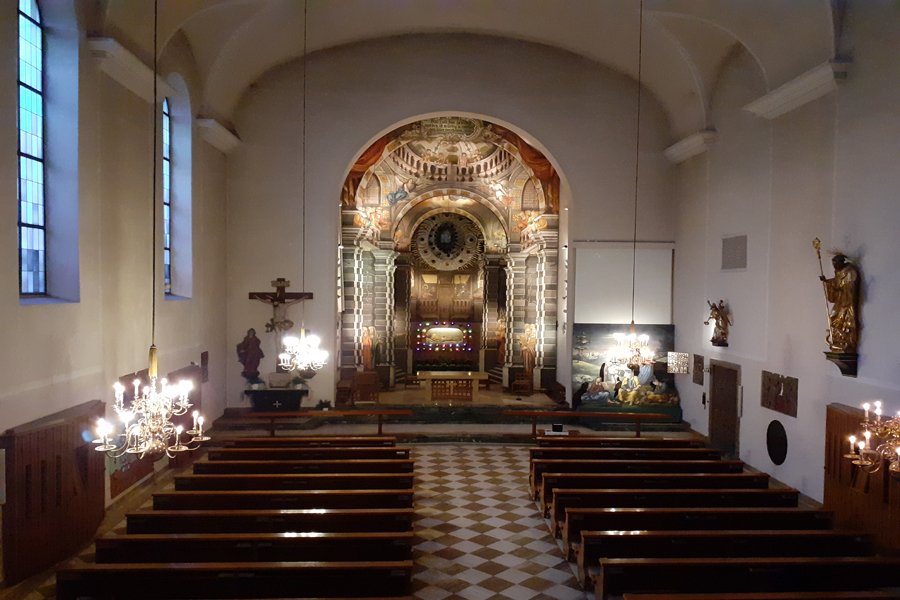
Dieses Heiliges Grab ist wie eine mehrschichtige Theaterkulisse aufgebaut. Die verwendeten Materialien sind Holz und Leinenstoff. Darauf gemalt sind verschiedene Szenen aus der Leidensgeschichte Jesu vom Gründonnerstag über den Karfreitag und Karsamstag bis hin zum Ostersonntag. Mindestens 25 ehrenamtliche Helfer brauchen rund 320 Stunden, um das Heilige Grab fachgerecht aufzustellen. Früher erleuchteten Öllampen das Ostergrab. Heute kommt modernste Lichtleitfasertechnik zum Einsatz. Diese ermöglicht es, eine Vielzahl an Lichtpunkten zu setzen, zu erhellen und zu verdunkeln und sogar einzelne Lichtszenen zu programmieren.
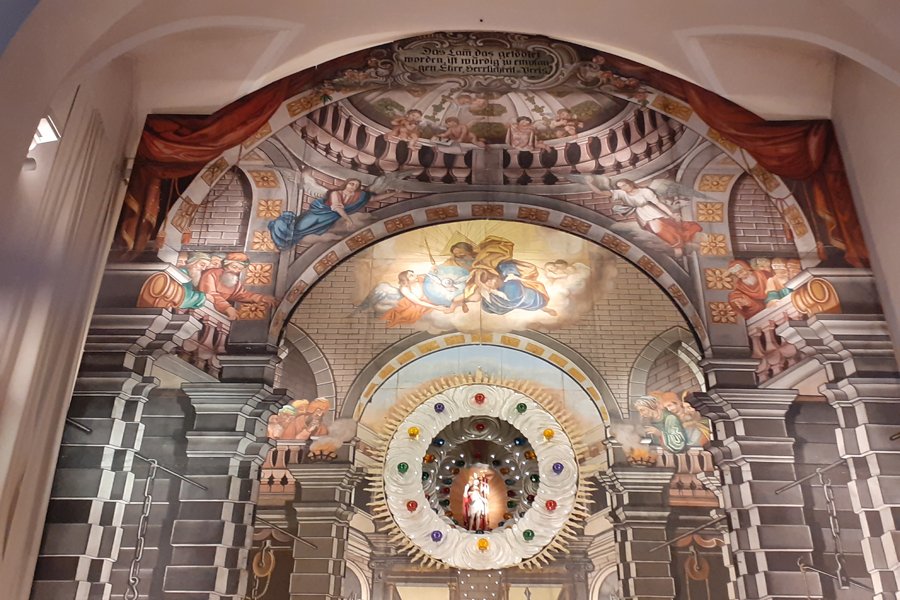
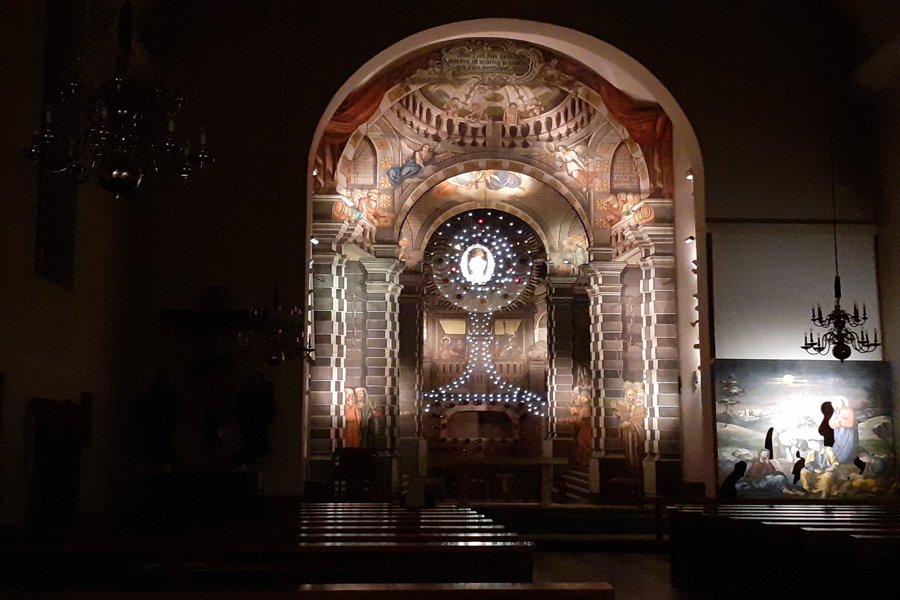
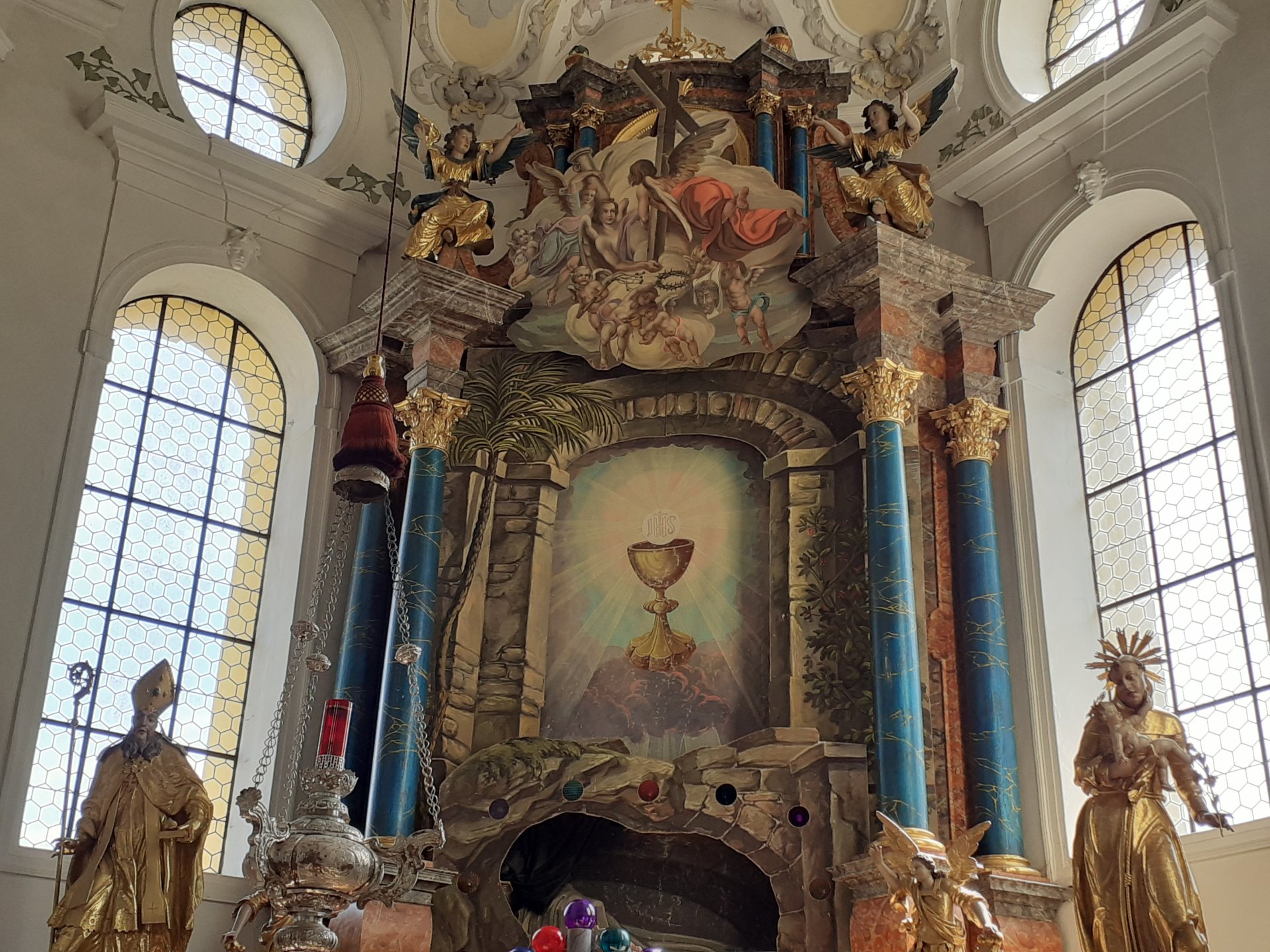
Das Gerüst des Grabes füllt den Raum in seiner ganzen Höhe von beeindruckenden 13 Metern. Es zeigt das dem Barock nachempfundene Theater sacrum, was „Heiliges Theater“ bedeutet, da es ein biblisches Ereignis zeigt. Gestaltet ist es im Stil des Klassizismus. Die vier Kulissenbögen täuschen räumliche Tiefe vor. Die vorderste Kulisse ist ein Triumphbogen, der den Blick nach hinten frei gibt. Der darauf gemalte Vorhang deutet wie bei einer Theatervorstellung eine „Enthüllung“ an. Die Kartusche im Bogenscheitel hat die Inschrift: „Das Lamm, das getötet worden, ist würdig zu empfangen Ehre, Herrlichkeit und Preis“ und bezieht sich auf den Tod des Erlösers am Kreuz.
Mächtige Säulenpaare begrenzen den nach hinten ziehenden hallenartigen Raum mit Balkonen – Balustraden genannt - und Kuppel. Eine zusätzliche Tiefenwirkung geben die Figuren an den Seiten und auf den Balustraden. Die beiden in den Zwickeln schwebenden Engel vermitteln zwischen Himmel und Erde. Darüber halten vier Putten die Leidenswerkzeuge Jesu – das sind Nägel, Kreuztafel, Schweißtuch und Dornenkrone.
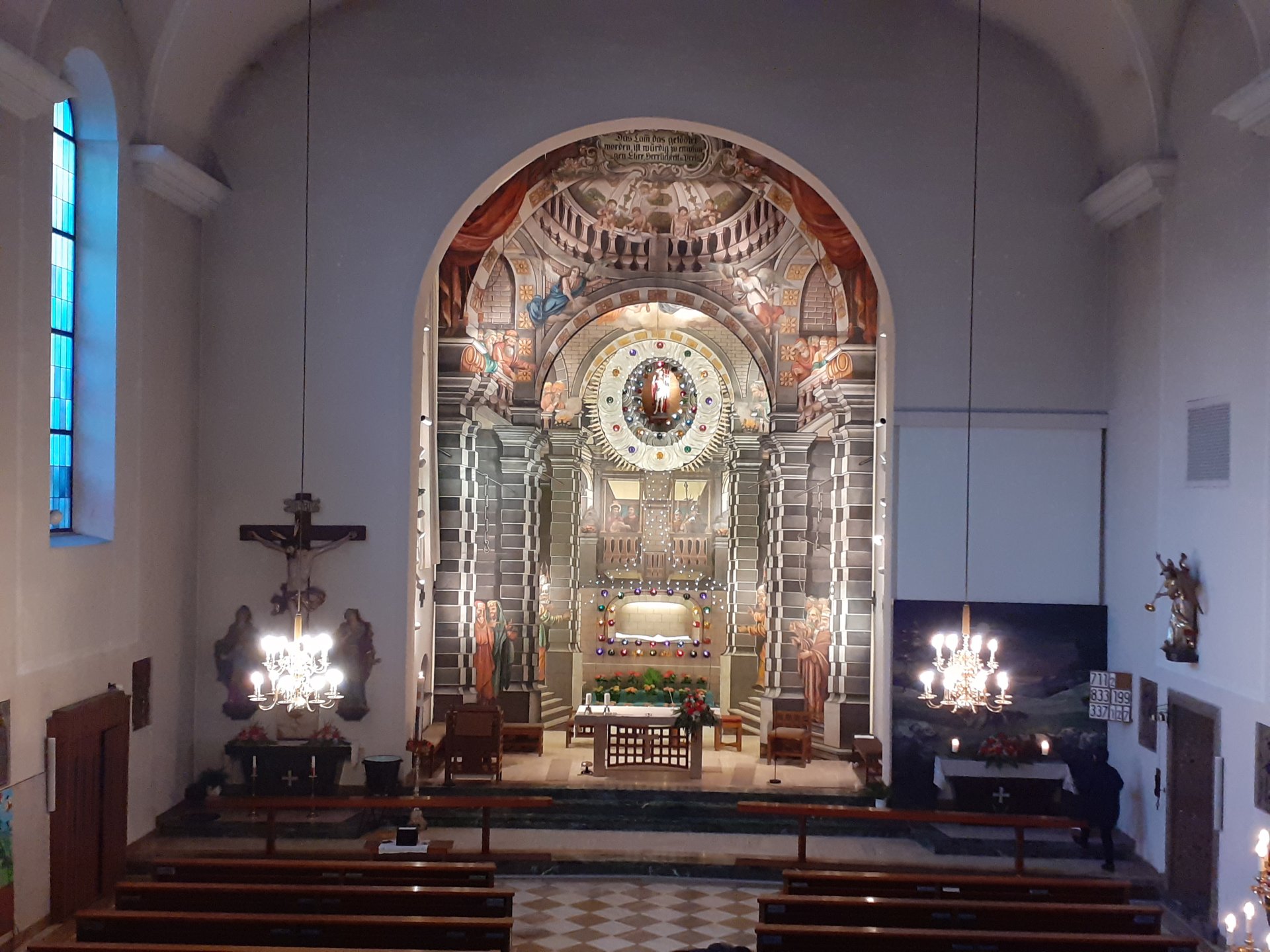
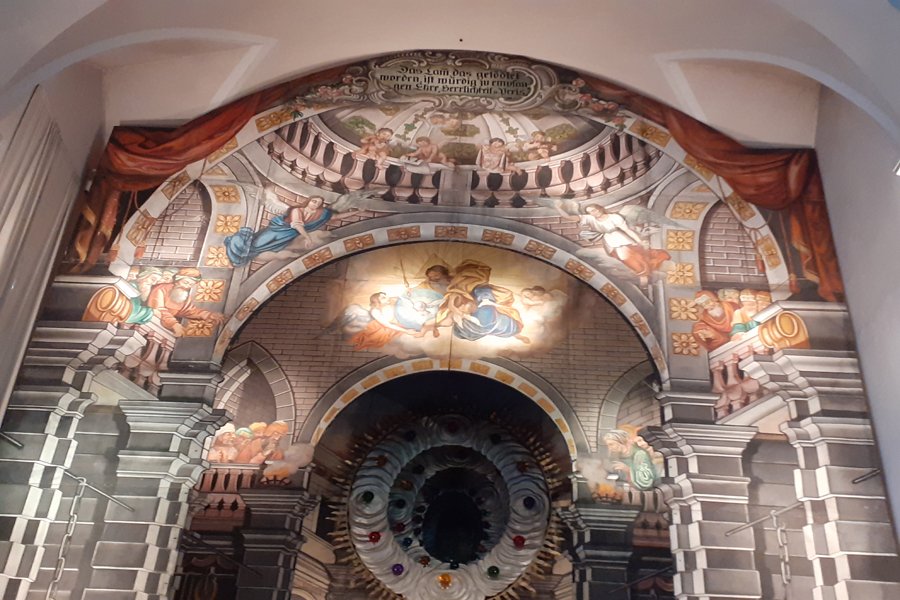
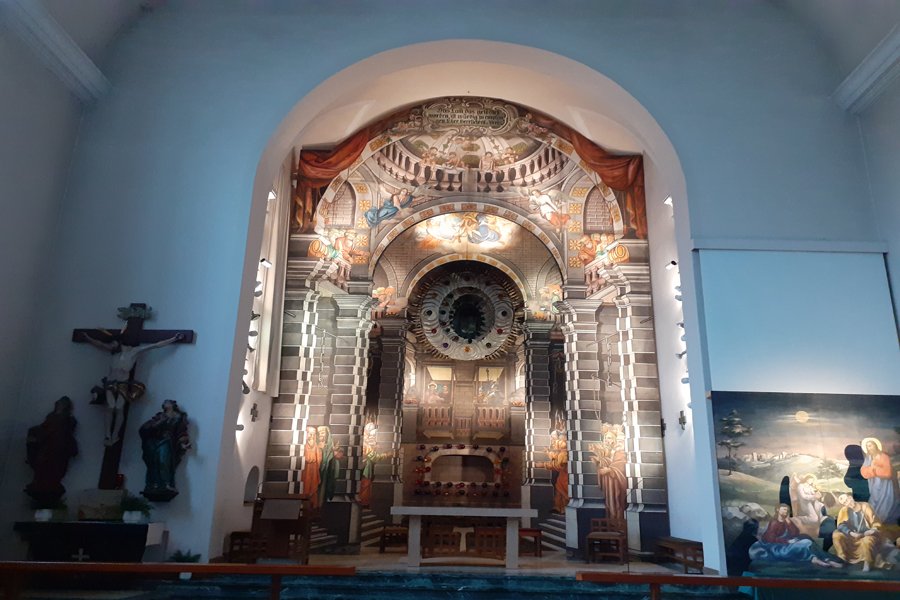
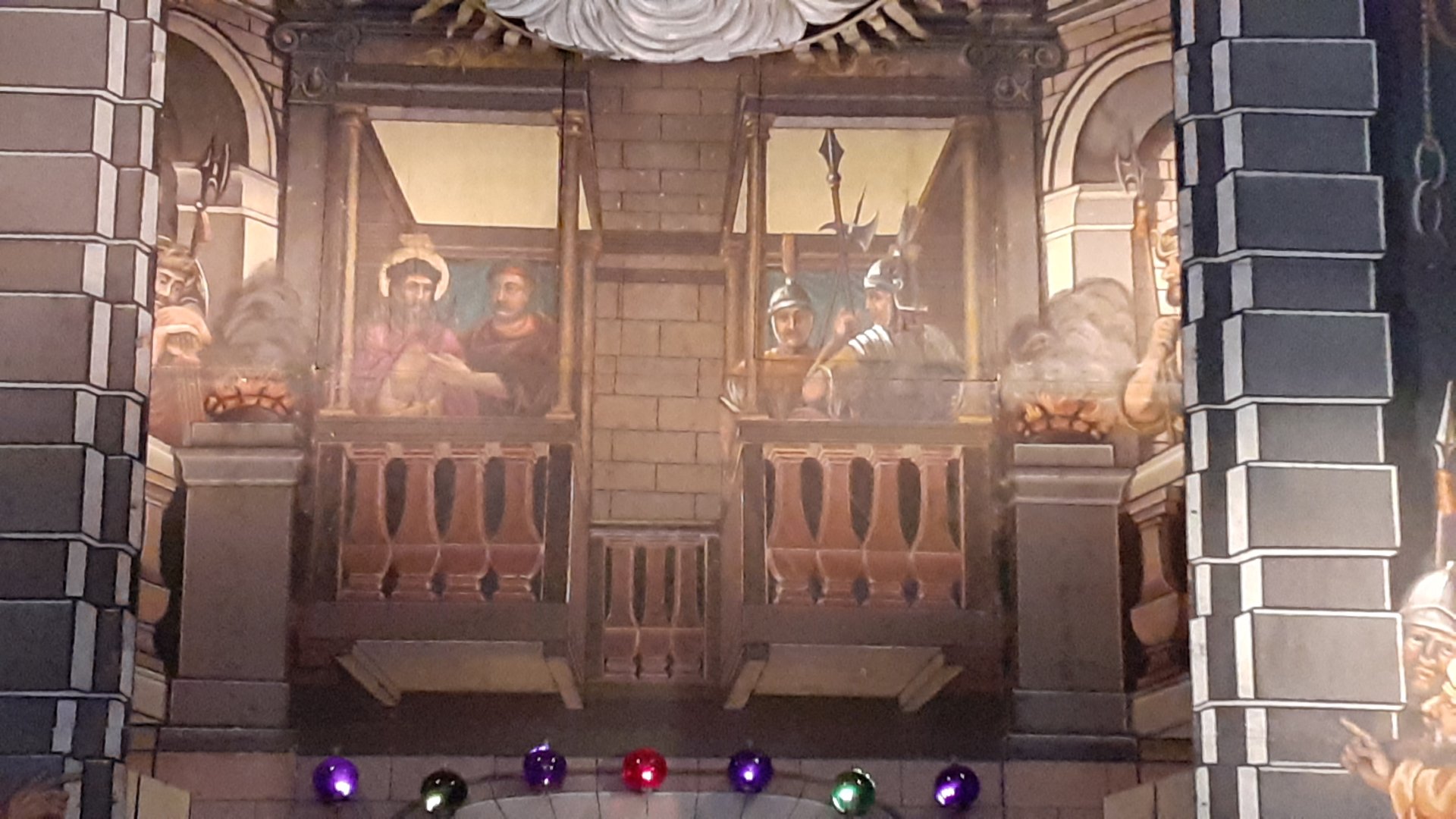
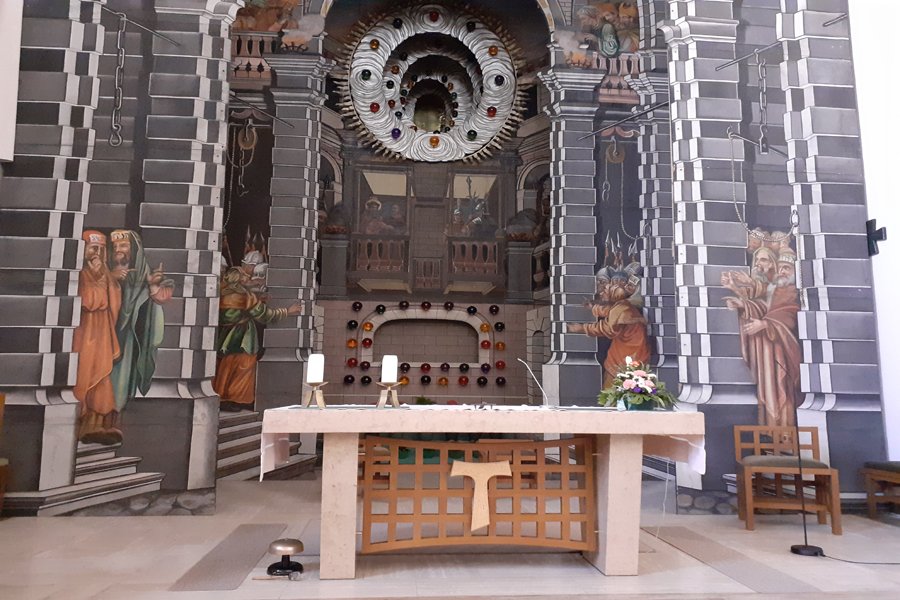
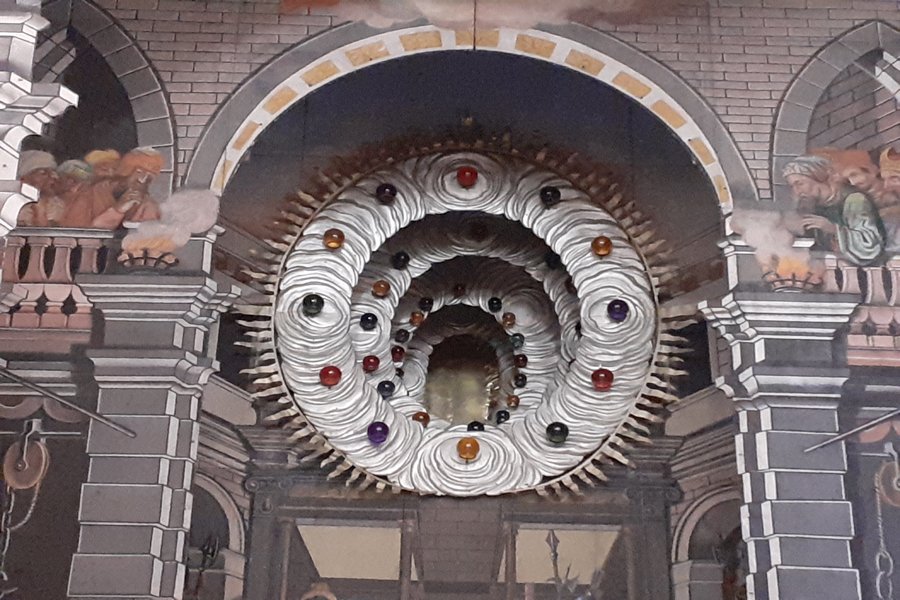
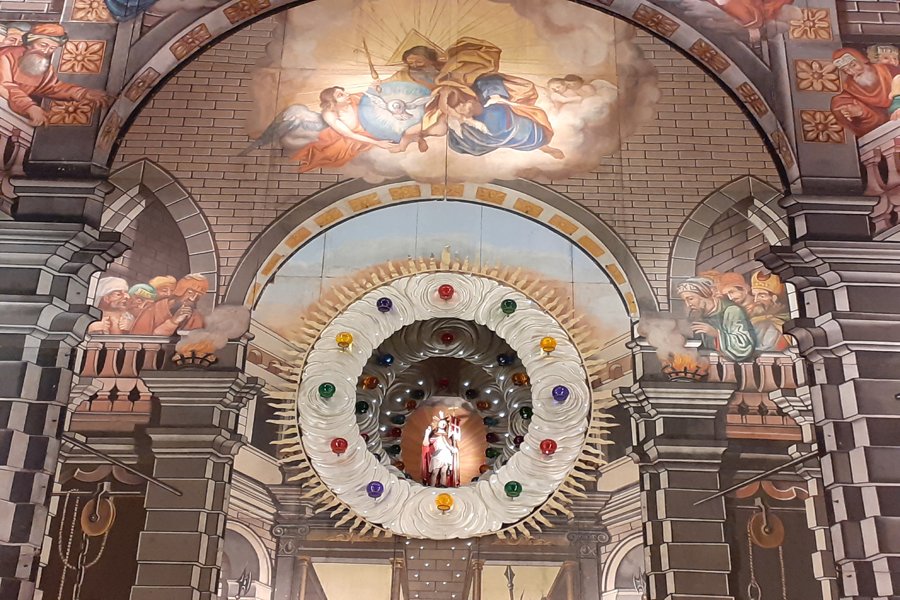
Die Hauptszene des Heiligen Grabes zeigt das Haus des Statthalters Pilatus über der von den bunten Osterkugeln eingerahmten Grabesöffnung. Hinter einer Balkonöffnung wird Christus, der Gegeißelte, dem Volk präsentiert.
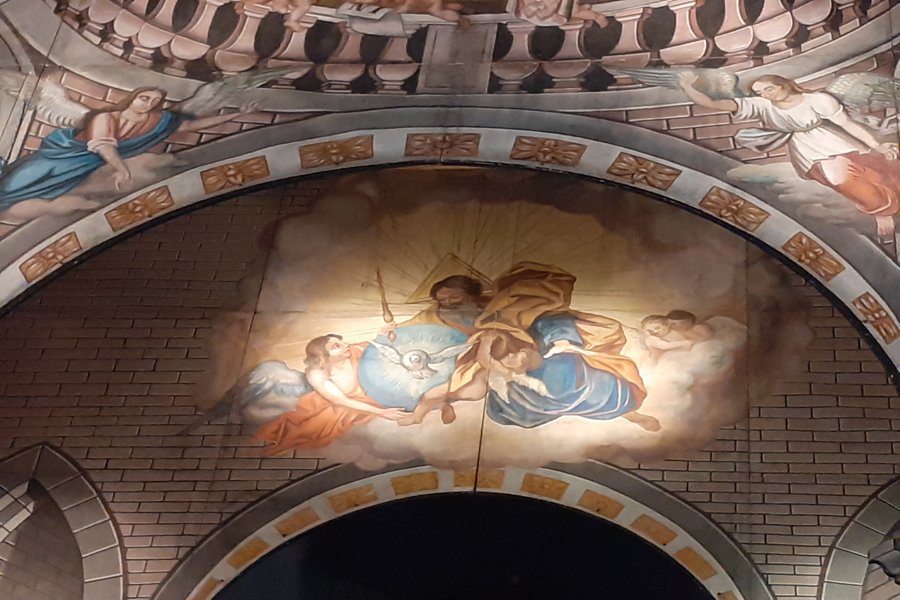
Darüber schwebt eine Wolkenrosette mit Flammenkranz und bunten Kugeln. Darin befindet sich das Allerheiligste, die Monstranz mit der Hostie. Darüber ist die Heilige Dreifaltigkeit – Gott Vater, Sohn und Heiliger Geist - zu sehen.
Der gemalte Garten bezieht sich auf den Begräbnisort Jesu.
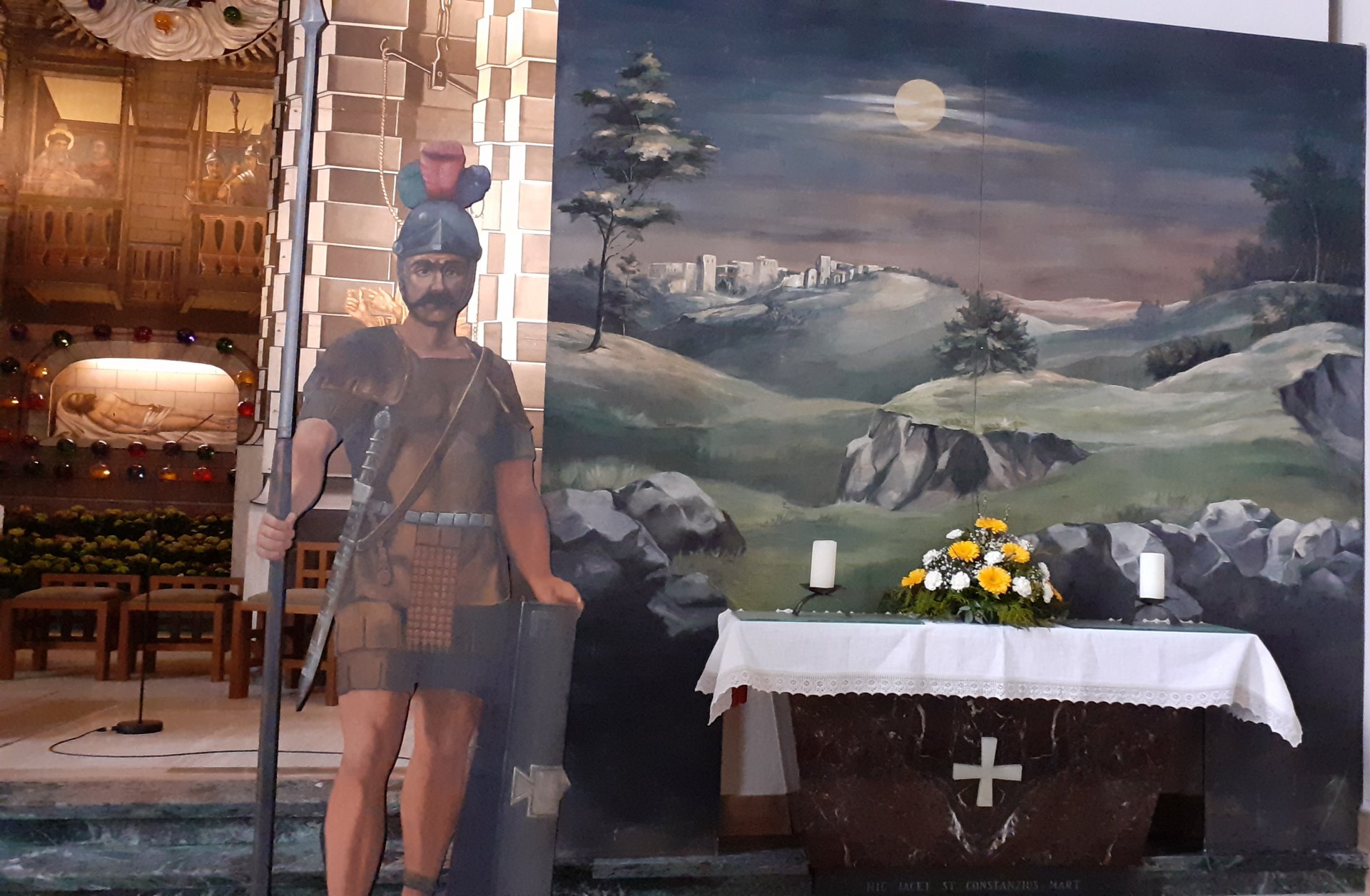
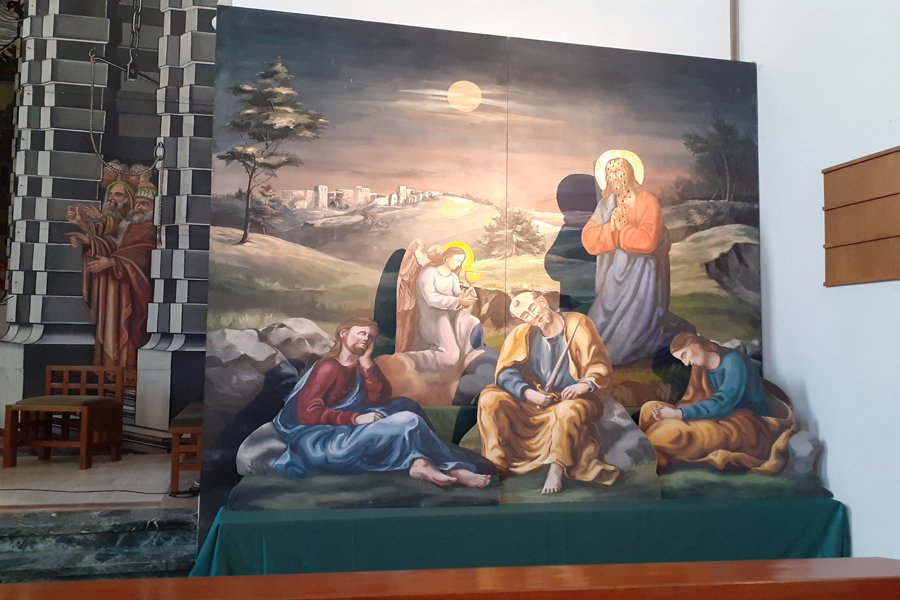
Am rechten Seitenaltar wird die Ölbergszene mit Christus und den drei schlafenden Jüngern im Garten Getsemani dargestellt. Ein Engel reicht dem vor Angst Blut schwitzenden Gottessohn den Kelch. Im Hintergrund ist die Silhouette der Stadt Jerusalem zu erkennen.
Die Bevölkerung besuchte das herrliche Heilige Grab jährlich in Scharen. In der Klosterchronik steht 1921 geschrieben, dass der Markt voll von Menschen war, die bis aus dem Allgäu herkamen.
1936 wurde das Heilige Grab zum letzten Mal in seiner vollen Größe aufgestellt und anschließend fast 50 Jahre auf dem Dachboden des Klosters gelagert. Im Jahre 2003 erfolgte nach einer umfangreichen Restaurierung die Wiederaufstellung.
Bestimmt könnt Ihr Euch jetzt verstehen, warum diese besondere Tradition mir und vielen anderen am Herzen liegt.
Wir wünschen Euch frohe Ostern und schöne, erholsame Feiertage mit Euren Lieben!