Hiking with children is no problem!


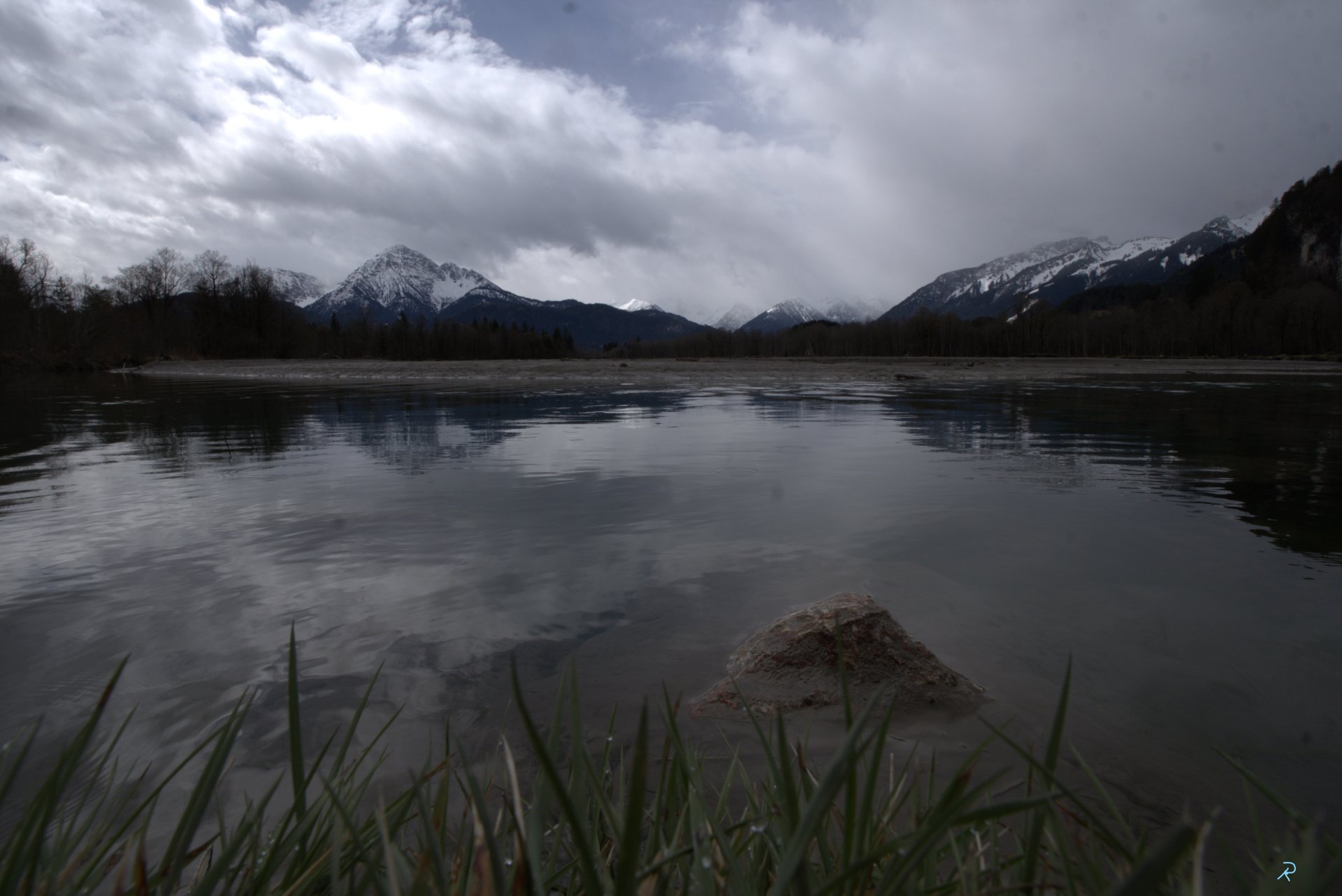
Die heutigen Bedingungen...
Ich freue mich darauf, die Rangerin Sabine Resch vom Naturpark Tiroler Lech und die restliche, bunt zusammengemischte Gruppe an Naturinteressierten heute hier zu treffen.
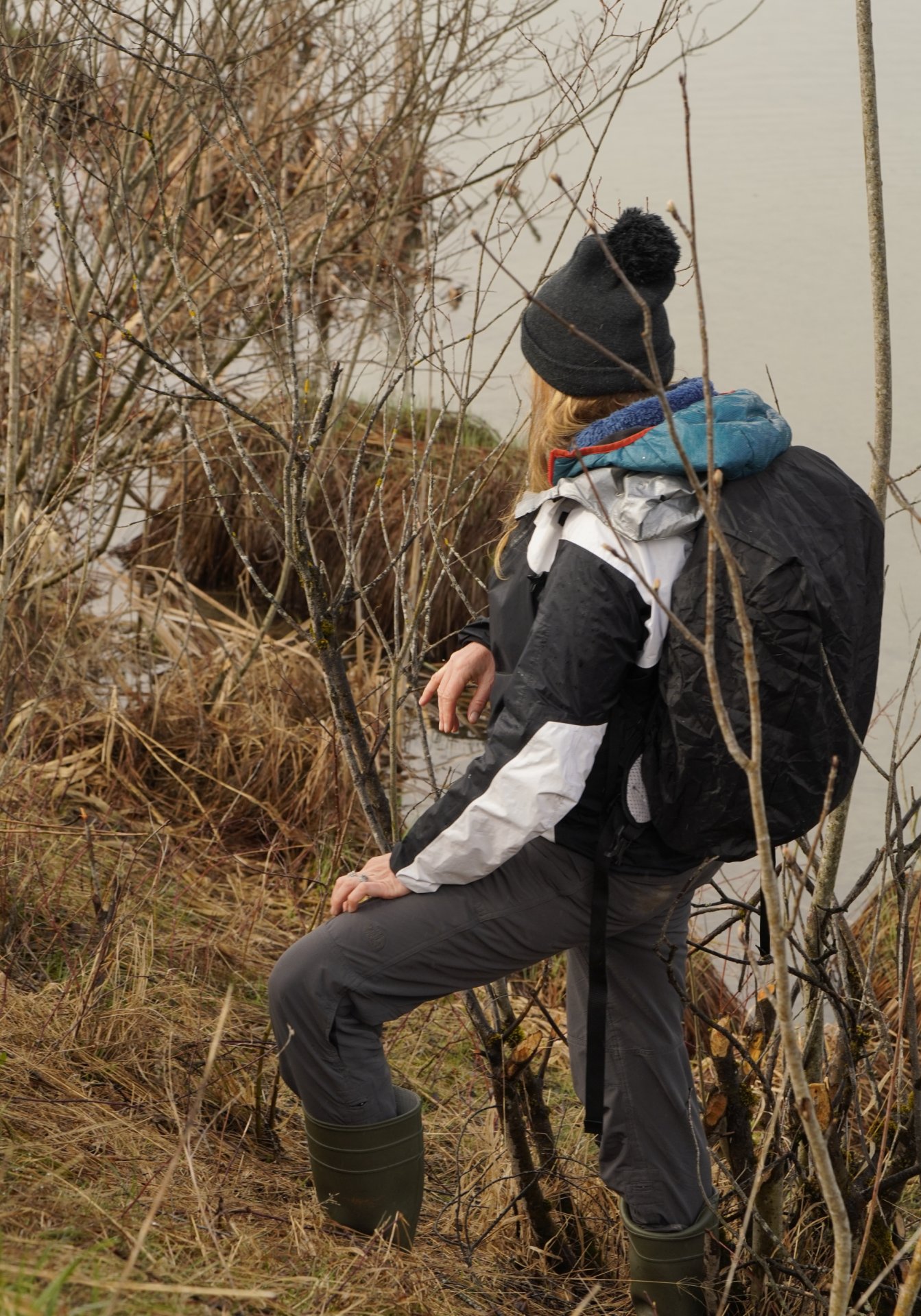
Dem Hauptdarsteller macht das Regenwetter nichts aus:
| Lateinisch | Castor fiber |
|---|---|
| Größe | zwischen 80-100 cm |
| Kelle (Schwanz) | ca. 30 cm |
| Gewicht | bis zu 30 kg |
| Beruf | Baumeister und Landschaftsarchitekt |
| Ernährung | vegetarisch |
| Lebensraum | Uferböschungen |
| Nächste Verwandte | Eichhörnchen und Murmeltier |
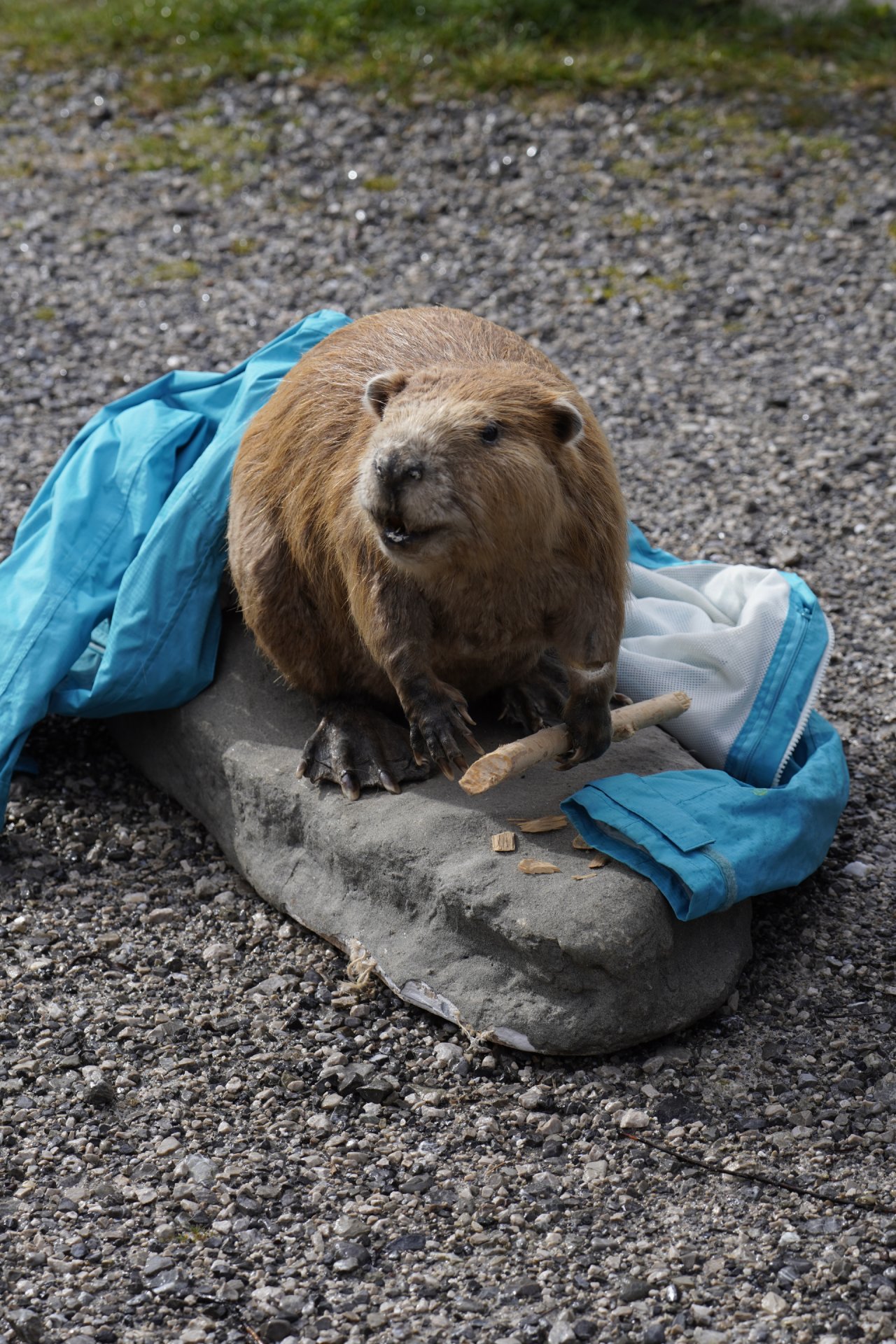
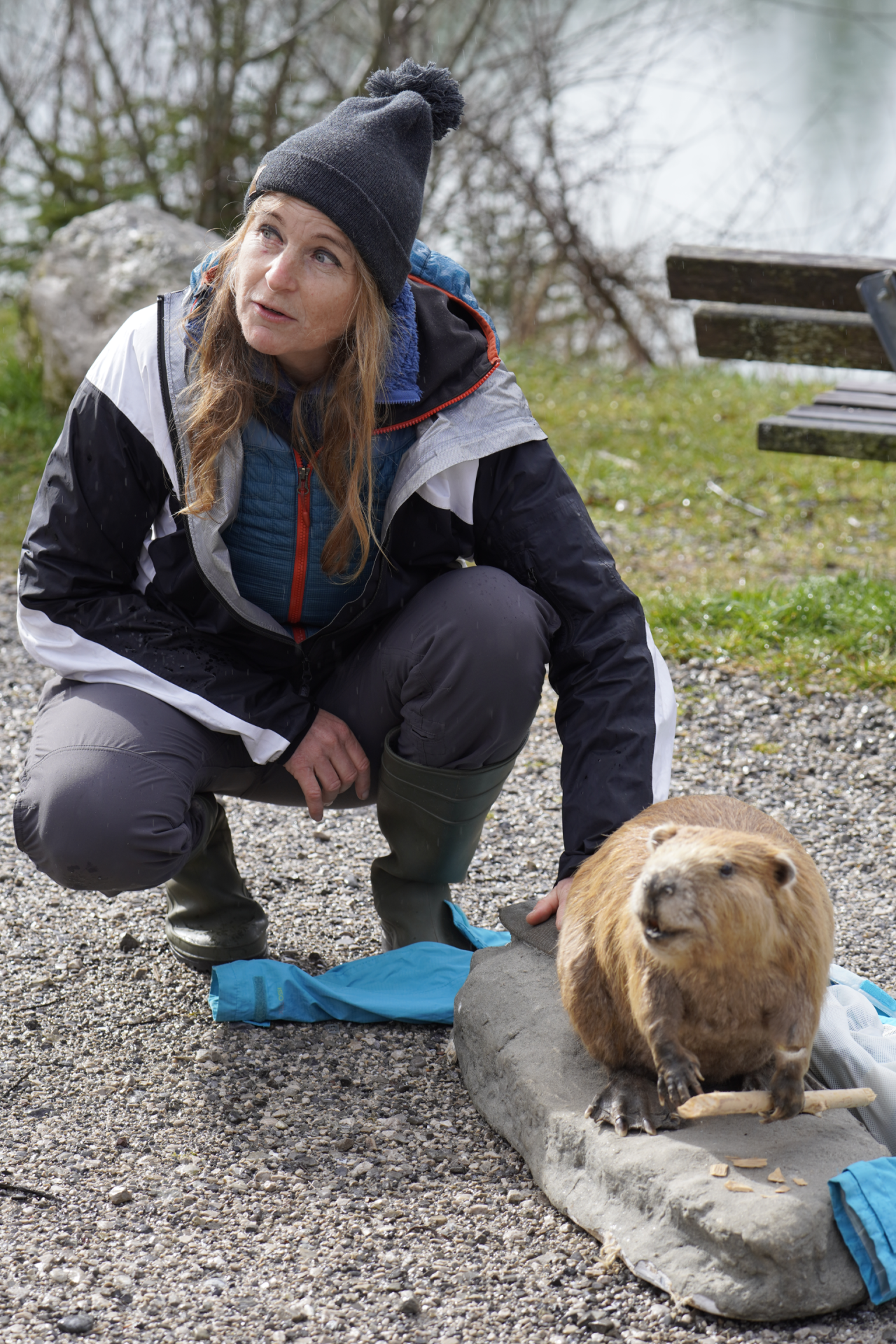
Bevor wir unsere Tour durch den Auwald am Lech, dem Lebensraum der Biber, starten, stellt uns Sabine den Nager anhand eines Modells vor und erklärt einige seiner Besonderheiten:
So können Biber zum Beispiel Nase und Ohren verschließen, dass beim Schwimmen kein Wasser hineinläuft. Die Augen können offen bleiben, sie haben eine durchsichtige, zweite Schutzhaut. Rund um die Nase befinden sich Tasthaare die zusätzlich zur Orientierung unter Wasser dienen.
Das Fell der Biber ist so dicht, dass die Haut darunter beim Schwimmen und Tauchen gar nicht nass wird. Zur Fellpflege nutzen sie ein wasserabweisendes Fett, das in einer Drüse am Schwanzansatz produziert wird. Dieses wird mit Hilfe einer gespaltenen Kralle an den Hinterfüßen, der Putzkralle, ins Fell „geputzt“. Die Hinterbeine haben Schwimmhäute zwischen den Zehen, die Vorderbeine haben „Finger“, die auch ganz schön zupacken können.
Am markantesten ist jedoch der Schwanz, die sogenannte Kelle. Diese hat kein Fell, sondern ist schuppenartig und dient nicht nur zum Schwimmen, sondern auch als Fettreserve.
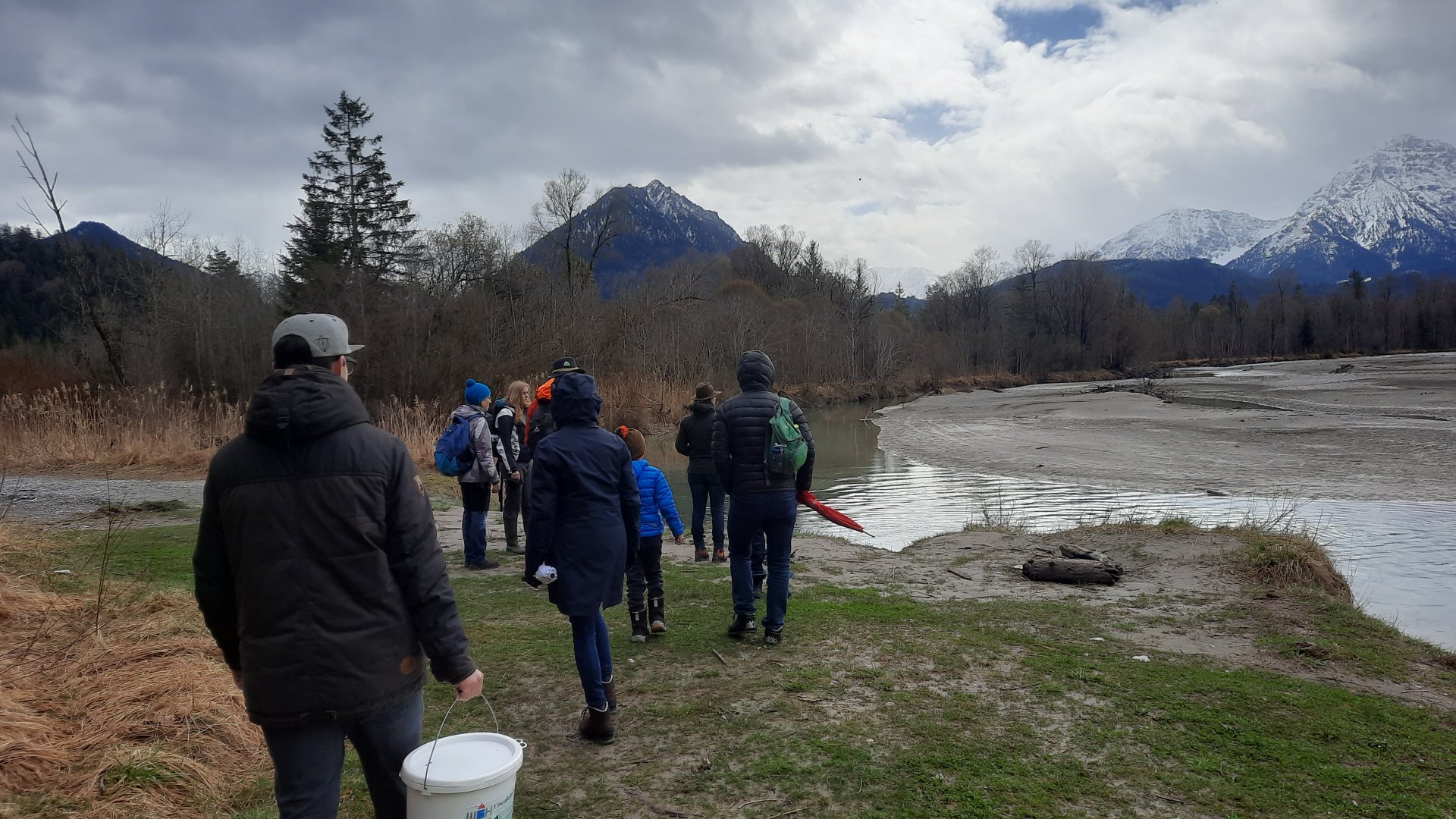
Jetzt, wo unserer Gruppe dieser Ur-Tiroler vorgestellt wurde, geht unsere Tour los.
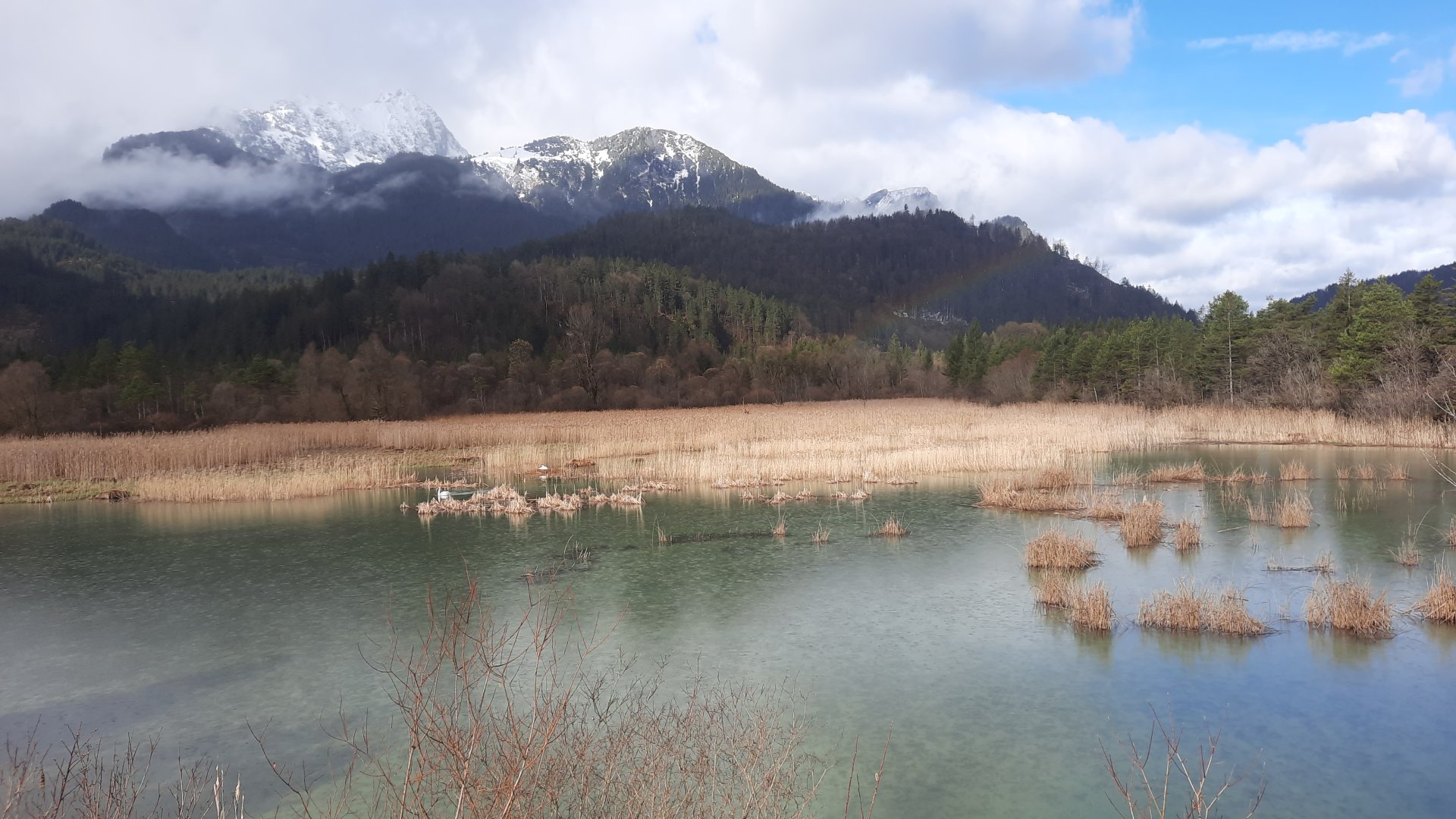
Wir spazieren am Weg an der Uferböschung entlang, vorbei an Blässhühnern und brütenden Schwänen. Schon nach wenigen Metern finden wir die ersten Biberspuren. Konkret heißt das schräg abgenagte Weidenzweige, und einen kegelförmig angenagten umgekippten Baum. Die Weidenzweige dienen dem Biber im Winter als Hauptnahrungsmittel und die Baumrinde ebenso. Äste und Zweige nutzt der Biber aber auch als Baumaterial für seinen Bau. Dämme bauen muss ein Biber hier gar nicht, aber dazu später mehr. Erst einmal dürfen wir die Lieblingsnahrung der Biber selber probieren. Weidenzweige. Die Salicylsäure darin wirkt übrigens schmerzlindernd, schmeckt den Menschen allerdings nicht so gut, da sie einen sehr bitteren Geschmack im Mund hinterlässt.
Ein Stück weiter den Weg entlang finden wir auf der anderen Uferseite etwas, das auf den ersten Blick wie ein beim letzten Hochwasser angeschwemmtes Chaos aus Ästen aussieht. Falsch. Hier hat eine Biberfamilie mit ausgeklügelter Ingenieurskunst ihr Zuhause gerichtet. Der Eingang in einen Biberbau ist immer unter Wasser, der Vorraum und die Wohnhöhle werden über Wasser entweder in die Uferböschung gebuddelt oder auch aus Ästen gebaut. So eine Biberburg wird zusätzlich von außen mit Lehm und Schlamm abgedichtet, bis auf ein Loch in der Schlafkammer. Irgendwie muss man ja schließlich atmen können! Im Vorraum halten sich Biber nur auf um das Fell aufzutrocknen, nass legt sich schließlich keiner gern ins Bett.
In so einem Bau kann ein einzelner Biber leben oder eine ganze Familie. Die Tiere sind sehr sozial und die Jungen leben bis sie zwei Jahre alt sind bei den Eltern. Die jungen Zweijährigen kümmern sich im Familienverbund um den Nachwuchs vom Folgejahr.
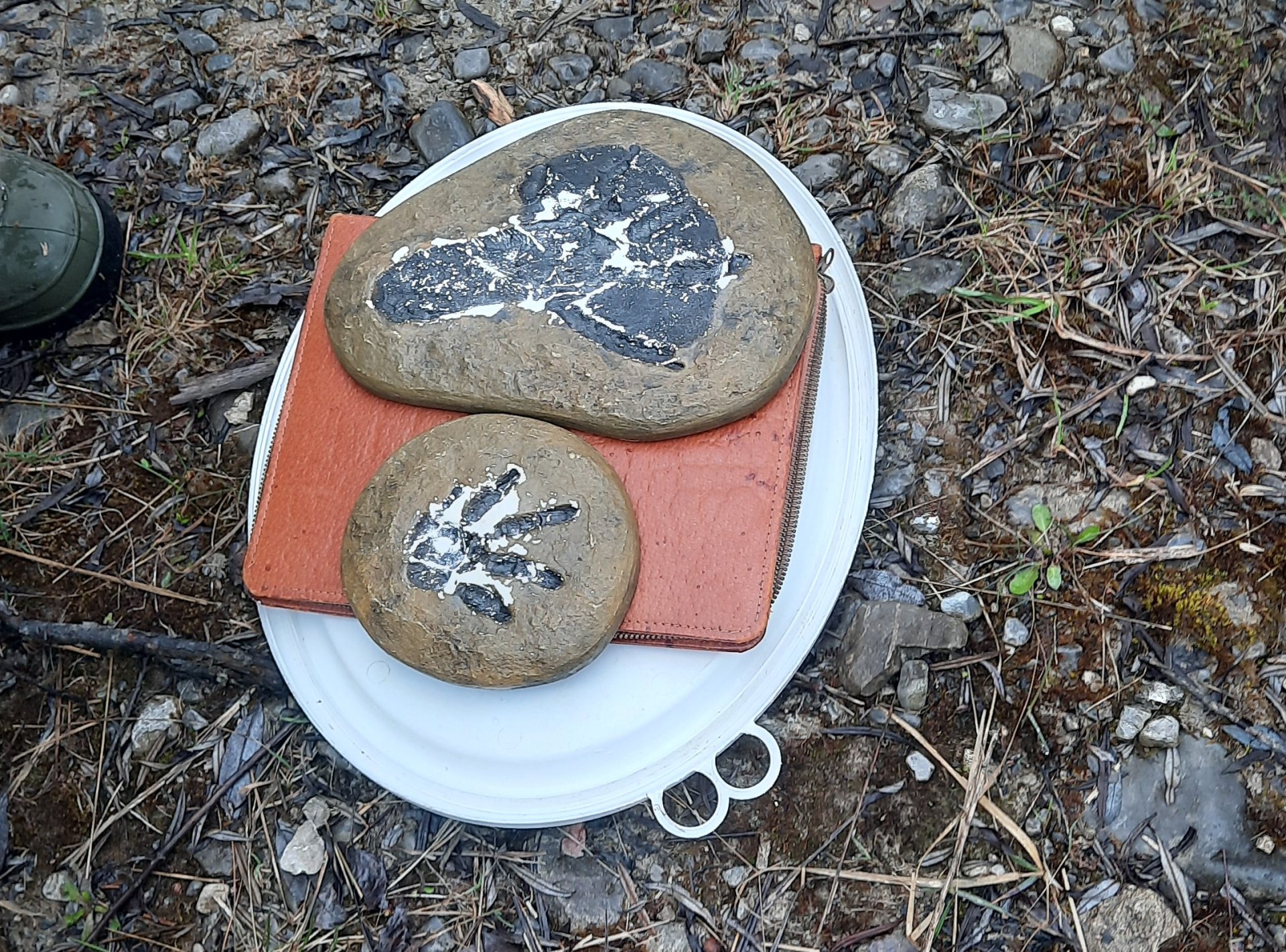
Vor einem bewohnten Biberbau ist über den Winter immer ein „Nahrungsfloß“ zu finden. Dafür werden Äste und Zweige gesammelt und auch diese werden geschickt im Boden verankert. Wenn das Wasser im Winter gefriert kann der Biber aus seinem Bau direkt zum Nahrungsfloß tauchen, Futter holen und in den Bau zurückkehren. Normalerweise bleiben Biber nur ca. 3-5 Minuten unter Wasser, können aber bis zu 20 Minuten tauchen.
Die an Land etwas plump wirkenden Tiere sind im Wasser sehr geschickt und schnell. Sie können schwimmend rasch flüchten und auch ihre Nahrung im Wasser gut transportieren.

Biber haben bei uns bis auf den Menschen und fremde Artgenossen keine Feinde. Die Biberpopulation kann trotzdem nie zu groß werden. Die Reviergröße richtet sich nach dem Futterangebot. Kommt ein Eindringling, wird gekämpft, wobei viele Biber durch die Verletzungen, die sie sich mit ihren Schneidezähnen zufügen, sterben.
Biber haben bei uns bis auf den Menschen und fremde Artgenossen keine Feinde. Die Biberpopulation kann trotzdem nie zu groß werden. Die Reviergröße richtet sich nach dem Futterangebot. Kommt ein Eindringling, wird gekämpft, wobei viele Biber durch die Verletzungen, die sie sich mit ihren Schneidezähnen zufügen, sterben.
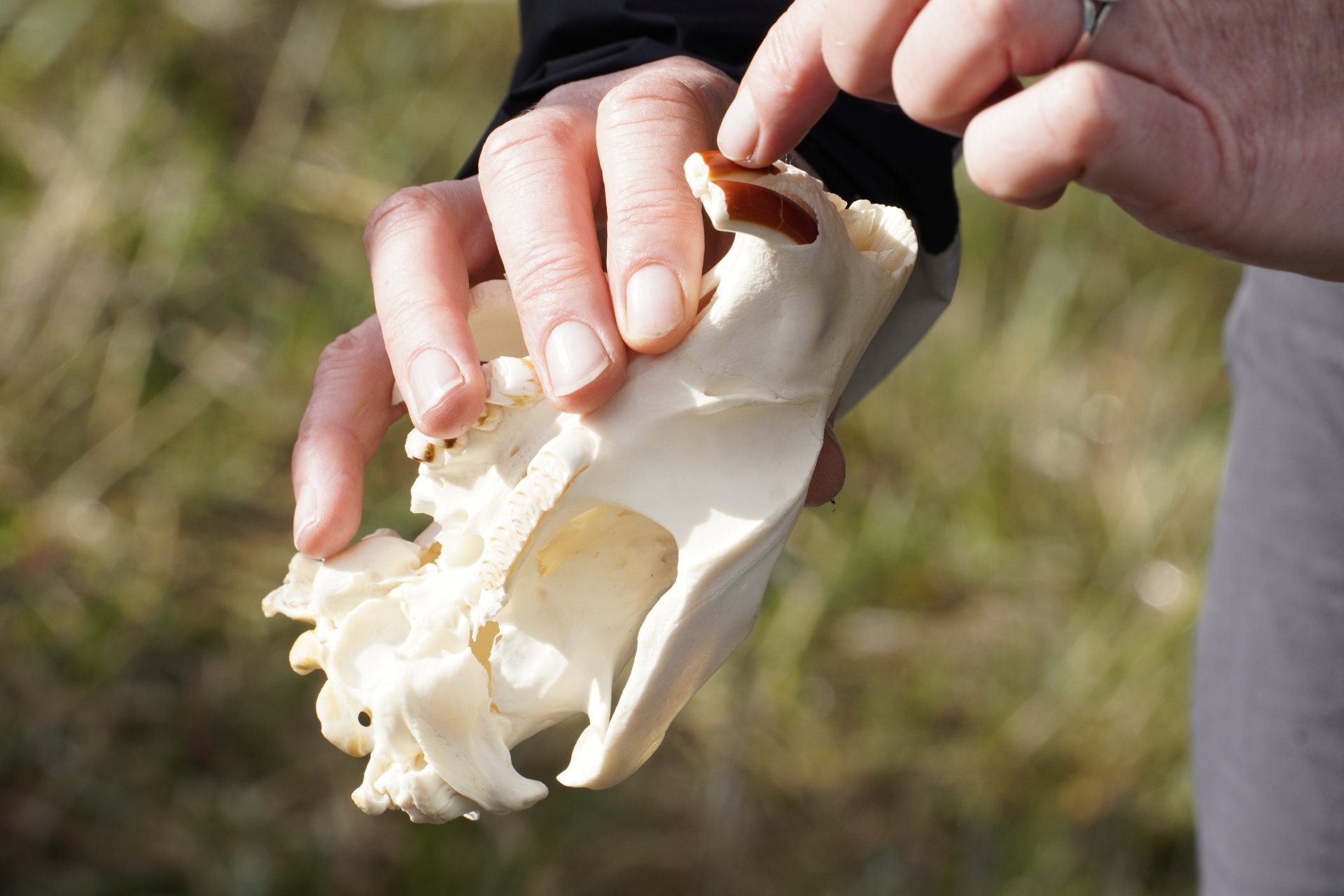
Biberzähne sind für die Holzfällarbeiten sehr hart und der Zahnschmelz auf der Außenseite der Schneidezähne sogar mit Eisen verstärkt, gut zu erkennen durch die orange-bräunliche Verfärbung der Zähne. Die Innenseite ist weicher, nützt sich daher auch schneller ab und so bleiben die Zähne immer scharf.
Wir gehen auf unserem Weg durch den Auwald noch ein Stück weiter. Sabine kennt sich nicht nur mit Bibern gut aus, sie erkennt auch alle anderen Tiere die wir unterwegs treffen, ebenso die vielen Vogelstimmen um uns herum und das sogar ohne dass wir die Sänger im Auwald sehen können. Sie macht uns auch auf andere Tierspuren aufmerksam und so finden wir sogar einen Dachsbau.
Am Ende unserer Runde zeigt sie uns noch etwas, das auf den ersten Blick aussieht wie ein Loch direkt neben dem Weg. Doch wer genau hinsieht erkennt, dass auch hier ein Biber tätig war, denn nicht nur das Wohnzimmer hat einen Lüftungsschacht, auch die umliegenden Fluchttunnel und Notfallverstecke müssen ja irgendwie mit Luft versorgt werden.
Biber sind generell sehr gute Bauingenieure. Egal ob es darum geht ein Zuhause in die erdigen Ufer zu buddeln, einen Bau komplett aus Holz zu gestalten oder sich gar mit Hilfe eines Dammes einen geeigneten Lebensraum zu schaffen. Hier in Pflach ist ein Damm nicht notwendig, da das Wasser hier schön langsam rinnt und in etwa hüfthoch ist. Optimal für Biber. Sollte die Wassertiefe um ihre Burg unter 80cm liegen oder der Baueingang nicht unter Wasser sein, versuchen sie, diese Wassertiefe durch einen Dammbau zu erreichen. Sie verankern dafür Äste auf dem Grund des Gewässers und errichten einen „ingenieurtechnisch“ einwandfreien Damm. Diese Dämme sind auch für uns Menschen sehr nützlich:
Z.B. verringert sich die Fließgeschwindigkeit des Wassers, was zum Schutz vor Hochwasser dient und das Wasser wird gefiltert. Durch seine Lebensweise schafft der Biber unterschiedlichste Lebensräume im Wasser und am Ufer und somit explodiert mit seiner Anwesenheit die Vielfalt von Tieren und Pflanzen. Diese Artenvielfalt stabilisiert natürliche Kreisläufe. Die Biber arbeiten ständig. Umgerechnet in menschliche wasserbauliche Maßnahmen und Renaturierungsarbeiten ist die Ökosystemleistung der Biber unbezahlbar. Bei Problemen, die auch durch die Aktivität des Biber entstehen können, sind in der Regel kleine Maßnahmen, die durch die Biberbeauftragten initiiert werden, ausreichend.
Die Freude ist groß, dass dieser Ur-Tiroler 200 Jahre nach seiner Ausrottung langsam wieder zurückkommt und in unserer Gegend ansässig wird. Voraussetzung für ein gutes, gemeinsames Miteinander ist die Bereitschaft von uns Menschen, auch anderen Lebewesen Platz für ihren Lebensraum zuzugestehen. Biber brauchen hiervon relativ wenig. Ca. 10 Meter Ufersaum mit pflanzlicher Nahrung sind in der Regel ausreichend.
Schön, dass die Biber heimgekehrt sind.
Klimm 2 | 6644 Elmen
+43 664 4168466
+43 664 4168465
info@naturpark-tiroler-lech.at
Naturführungen können z.B. auch für Vereine gebucht werden und es gibt auch viele weitere tolle Veranstaltungen.